Saturday, March 18, 2017

My Mango Memories shared with Rajdhani


(raulontheprowl associates with Khandani Rajdhani thali restaurant chain)

Friday, March 10, 2017

A Cut Above

Cutting a swathe through time with its legendary knife shops, the ancient Japanese town of Sakai is where all the superstars of the culinary world descend upon to get their very own slice of the action.


By Raul Dias

It’s funny how Japan’s legendary weirdness gets magnified to alarming proportions when seen through the prism of a quirk-obsessed chef with a yen (do pardon the pun!) for the odd. That, I realised, almost as soon as my Swedish chef pal and I touched down at Tokyo’s Narita International Airport, kick starting the first leg of our two-week-long Japan food pilgrimage.
An izakaya-style meal at the simian server-staffed Kayabukiya Tavern, a sake house north of Tokyo in the suburb of Utsunomiya. Check. An entire day spent tracking down Saruya, a 1704-established store in Nihonbashi, that has, for the last three centuries, been selling only one item—toothpicks! Check.
And the eccentricity-laced leitmotif of the trip continued, when a few days later, we found ourselves boarding a blue line JR train, heading towards Sakai, a town not very far from Osaka. A rather nondescript little place with a solo claim to fame of being Japan’s undisputed ‘City of Knives’ since the mid-16th Century. Once the Kansai region’s main bastion of producing the finest Samurai swords, today approximately 90 per cent of all Japanese-style chef knives are made here. All this, thanks to tobacco.
Being a port town, Sakai was where the Portuguese first brought in tobacco to trade with Japan in 1543. Cottoning onto the lucre tobacco-growing promised, the Japanese soon started growing the crop. Needing an implement to cut through the fibrous leaves, the erstwhile Samurai sword-forging blacksmiths of Sakai soon came up with a steel knife so expertly made that it would set the benchmark for knife making the world over. So much so, that today, the town not only has its own ‘Sakai Wazashu’ seal of knife quality, but also its own dedicated Sakai Hamono Knife Museum.
Here’s a round-up of Sakai’s best knife makers:

Yamawaki Hamano Seisakusho
With an almost 100-year-old legacy behind it of producing the more expensive hand forged steel knives, buying a knife at the legendary Yamawaki Hamano Seisakusho can cost anywhere up to $3,000 a pop. No wonder then, that some of the culinary world’s greats like Heston Blumenthal and Thomas Keller are patrons of this rather austere-looking shop that also sells whet stones for maintaining a knife’s razor edge. They even provide an engraving service where one can personalise their knives with their names etched in Kanji characters.           

Sakai Yusuke
Ignore its lurid purple awning and obscure location along Sakai’s noisy Kishu Highway and step inside this knife wonderland that’s packed to the rafters with a cornucopia of styles and sizes to suit every need and even handedness! Besides finding knives for the left-handed folk among us, you can take your pick from single-edged, double-edged, sashimi knives, and meat swords. Later, one can even sit down for a ‘how-to-take-care’ tutorial by the very enthusiastic staff. And for those looking for Western-style knives, Sakai Yusuke has an entire separate range of butcher’s knives, cleavers and even dainty little paring knives aptly called ‘petty’.

Sakai Takayuki
With an equally strong presence in the online shopping world, this brick and mortar warehouse-cum-store located in the heart of Sakai is famous for being the purveyors of the beautiful Damascus steel style of forging. In this very distinct style, 33 layers of steel are laminated and folded over a core, that’s then dipped in acid to reveal a wood grain-like pattern—sans any grainy texture—imprinted on to the knife that is rendered resistant to shattering due to the forging technique. One of their most popular products is the Sujihiki Carving Knife that costs upwards of $200.

Ikkanshi Tadatsuna
Gleaming behind their glass showcases and gently placed on red velvet cushions, all types of traditional Japanese knives are on wanton display. From the deba fileting knife and the usuba vegetable slicing knife to the gyuto that closely resembles a western meat knife, Ikkanshi Tadatsuna has it all under one roof, making it the preferred knife shop of Iron Chef Michiba. A fact that is quickly made apparent with the knife-wielding chef’s framed picture that hangs from a wall in the otherwise unassuming shop.

Suisin
Tucked away in a back alley, away from the din of the other knife shops in Sakai is the magical little Suisin that is very much still a family run business of Mr. Aoki and his son Tatsuya. And though its knives may be a part of the kitchens of sushi masters like Chef Morimoto, Suisin’s star knife smith is Kejiro Doi, who is legendary for the skilled craftsmanship he displays in his yanigi-ba knives that are the classic thin and long sashimi knives. As a sign of his finesse, each of his creations come etched with his trademark of a diamond and neatly wrapped in a fine silk sheath, reminding us of the Japanese obsession with perfection.


Aoki-Hamano Seisakusho
In an interesting little departure from the other Sakai knife makers on this list, this 1942-established company focusses primarily on crafting confectionary knives. Used to slice the ubiquitous Japanese sponge cakes and the more traditional manju steamed stuffed bun dough, Aoki-Hamano Seisakusho’s knives are a Japanese pastry chef’s most coveted possessions. This is thanks to the razor sharp, flexible blade and sturdy handles that are crafted from magnolia wood and even ebony for the ‘high rollers’ of the world of confectionary.     

(A shorter, edited version of this article appeared in the 11th March 2017 issue of the Mint Lounge newspaper, India http://www.livemint.com/Leisure/VuhVZ1pglcjSofHMGantYP/Sakai-The-city-of-knives.html)

Wednesday, March 8, 2017

Unusual ‘Spa’ing!

From a floating spa to one 20,000 leagues (well, not really!) under the sea, and from a salt-encrusted cave spa to a ‘leviating’ science fiction-esque one, a few unusual spas around the world are pushing the envelope, offering up a plethora of rejuvenating treatments for the adventurous sybarite. RAUL DIAS takes you to seven such repositories of relaxation 


THE BOTA BOTA SPA
CANADA
25,000 square feet. 678 portholes. 40 types of services. 35 massage therapists. 21 treatment rooms. In numbers, the floating Bota Bota Spa in Old Montreal, Canada is über impressive to say the very least. But throw in the fact that in its earlier avatar, it was a ferryboat carrying passengers from Sorel to Berthier in Quebec in the 1950s and ’60s, as well enjoying a run a showboat on the Richelieu River and you soon realise how truly unusual this floating spa is! Today, the gentle ebbing of the St. Lawrence River relaxes and energizes guests on the boats five decks that boast an eucalyptus steam bath, outdoor whirlpools and relaxing gardens. The treatments are mostly centred on the benefits of water, including the in-demand Nordic baths that detoxify and cleanse the body. While it might look slightly industrial from the outside, the Bota Bota Spa is surprisingly comfortable and very relaxing on the inside. There is also a restaurant on-board the ship, serving meals made from fresh, healthy and locally sourced ingredients from Quebec.

Top Indulgence: The 60 minutes ‘The Escape Treatment’ that includes an exfoliation, body wrap, head and neck massage.


THE BLUE LAGOON
ICELAND
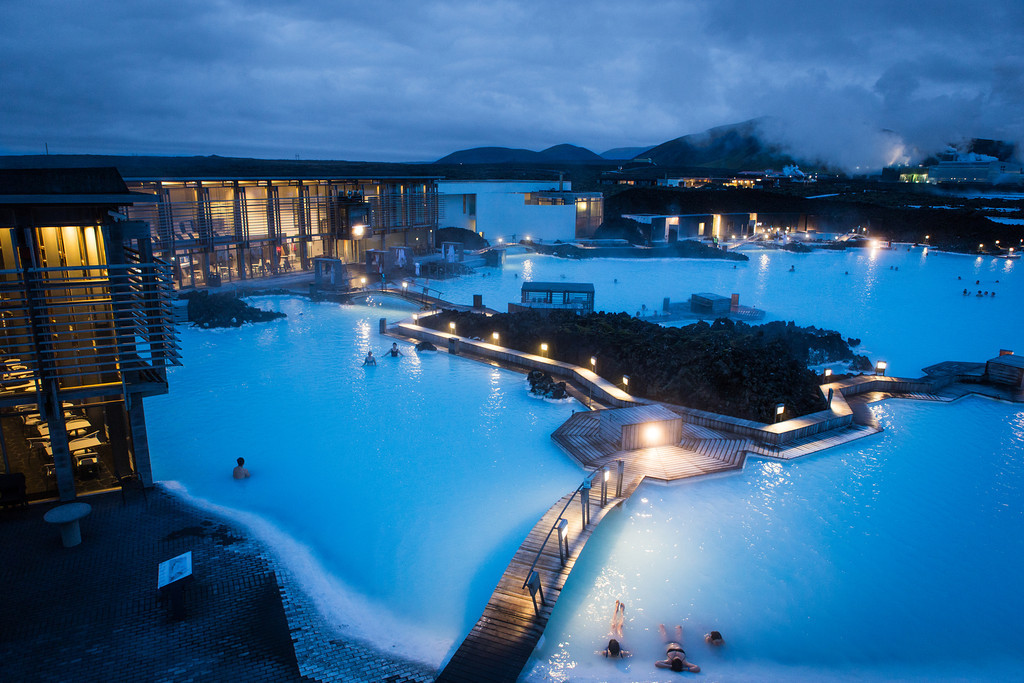
As one of Iceland’s most popular spas — renowned for its therapeutic waters — it is no great surprise that The Blue Lagoon draws in over 400,000 visitors annually. Allowing guests to commune with nature in six million litres of geothermal seawater, the spa is located in Iceland’s lava fields of Grindavik on the Reykjanes Peninsula. This scenic, and often extreme environment is the perfect setting for this mineral-rich spa that, as its website claims, affords guests the chance to “actually bathe between two continents as the Euro-Asian and American tectonic plates meet at the Blue Lagoon”. While soaking in the waters is said to do wonders for the skin leaving it supple and smooth, the all-natural spa also uses the silica mud surrounding the lagoon to help soothe troubled skin. Be sure to experience the sauna at the spa, which has been carved into the lagoon’s lava rocks.
Top Indulgence: The 30 minutes Silica Mud Mask treatment that is the spa’s signature treatment is legendry for its soothing, toning and rehydrating properties, leaving your face rejuvenated.  


THE AQUADOME SPA
AUSTRIA
Amply displaying more similarities with an eerie extraterrestrial habitation, than a spa, the Aquadome Spa that is situated in the Alps in Lӓngenfeld, Austria, seems straight out of the latest Hollywood sci-fi movie. From three levitating bowl-shaped pools with underwater music and light effects to thermal domes housing indoor pools, everything about this spa is so cool; you can’t help but want to go there to see it for yourself. With plenty of options to pamper you silly, this spa offers classic treatments along with a heady mix of aesthetic and cosmetic packages, along with bath ceremonies and rituals. So, if you can picture yourself floating across the surface of a heated pool while gazing up at the alpine peaks; the thermal Aquadome Spa is there to make it a reality!
Top Indulgence: The specially designed for men 50 minutes Mountain Force Sport Treatment is the ideal treatment for reinvigorating your stressed muscles with cupping, massaging and stretching actions employed to rebalance you.


THE LIME SPA
THE MALDIVES
While The Maldives Islands have so far been famous for their myriad underwater suites and restaurants, an underwater spa of this magnitude is a first. The Lime Spa at Per Aquum Niyama on the Dhaalu Atoll has taken that concept to the extreme by creating the world’s first underwater spa that offers natural treatments with a view of the ocean floor. Set within its own lagoon, The Lime Spa enables you to float through multi-day journeys of hydrating wraps, intuitive massages, couture facials and underwater dream therapies. It’s an immersive environment, designed to reflect the serene, aquatic surroundings — right down to the plush cushions that evoke a skin-friendly version of coral and sea sponges, to the ethereal fabrics created to look like kelp. In addition to the underwater and overwater treatment rooms, the spa is also home to Sublime, which offers pre and post-treatment relaxation with sauna, steam, an onsen shower, mist shower, ice room, and a relaxation lounge with panoramic views of the Indian Ocean as you spot exotic marine swim by. Trust us; Finding Dory was never this fun!
Top Indulgence: The 75 minutes Holistic Duo is the perfect couples’ treatment that includes an aromatherapy massage and a Himalayan singing bowl session that they guarantee will lull you both into a state of deep relaxation...


THE INTEGRATRON
USA
An acoustically perfect tabernacle and energy machine in the mystical Mojave Desert in south-eastern California, USA, The Integratron is a geomagnetic vortex desert spa offering some seriously alternative therapies to balance out your body’s Qi. Creator George Van Tassel, who was an aeronautical engineer and test pilot, claimed that the structure is based on the design of Moses’ Tabernacle, the writings of Nikola Tesla and telepathic directions from extra-terrestrials (yes, you read that right!). The giant dome structure offers sonic healing sessions to those seeking a one-stop shop for physical and spiritual healing. Known as ‘Sound Baths’, the sessions will have you resting comfortably in the deeply resonant, multi-wave sound chamber, while a sequence of quartz crystal singing bowls are played, each one keyed to the energy centres or chakras of the body.
Top Indulgence:  The 60 minutes All Sound Baths Sonic Healing Session that consist of 25 minutes of crystal bowls played live and the balance of the hour to integrate the sound and relax in the sound chamber to recorded music that results in waves of peace, heightened awareness, and relaxation of the mind and body.


THE TSCHUGGEN BERGOASE SPA
SWITZERLAND
Created to resemble vegetal forms and trees, the striking, geometric structures jutting from the Tschuggen Bergoase Spa in Arosa, Switzerland are a sight to behold with their vertiginous metal and glass shards that almost seem to piece the still, cool Alpine air. Set on 5,000 square meters of land, the spa provides an exceptional view of the rugged mountain terrain and allows natural light into the treatment rooms that are spread over four floors—some of them even underground and set into the mountain itself. Architect Mario Botta was mindful of the surrounding villages and natural environment, so he aimed to “build without over-building.” With Switzerland famous for its spas, the Tschuggen Bergoase Spa has plenty of treatment to choose from, using products from Sensai, Clarins, Comfort Zone, OPI and La Biosthétique for a truly indulgent experience. Moreover, the mountain  sauna  of  original,  ancient  rock  combined  with  the  various steam rooms  and  saunas  helps you rejuvenate with the energy of nature seeping in.
Top Indulgence:  The 50 minutes Men’s Facial is a personalised treatment using Clarins Men’s products, specially formulated for men’s skin types, designed to leave your skin feeling fresh, clear and rejuvenated.


THE GALOS SALT-IODINE CAVES SPA
USA
This haven of tranquillity slap bang in the middle of Chicago, USA, relies on the benefits of Crimean salt. Low levels of iodine in parts of the US make Chicago a perfect spot for this pastel-hued spa. Derived from the mysterious Black Sea, which is known to have healing effects on dysfunctions in the respiratory, digestive, nervous and cardiovascular systems, the Crimean salt is crystallised naturally to mimic these effects. While the crystallised salt itself has a delicate pink colour, the lights inside the caves subscribe to colour therapy and are arranged in a way to soothe your senses. With a plethora of treatments that offer healing baths, water treatments, inhalation and irrigation, and the faint flowery aroma of the salt, this unique spa is a culmination of overall wellness and relaxation. Besides its cosmetic benefits, a visit to Galos is beneficial to the body, as the air is intensively charged with salt particles and has a natural anti-infectious effect; it stimulates the immune system and is great for the skin. The sea microclimate created inside the caves provides an oasis of peace and relaxation. Ah, bliss!
Top Indulgence: The 45 minutes Balneotherapy session uses the minerals from water, peloids and gases for glowing skin and rids the body of toxins.  


(An edited version of this piece was first published in the March, 2017 issue of The Week's The Man magazine)

Saturday, March 4, 2017

Pop-Up, Stay-Up!

By Raul Dias

Known for its ephemeral, fry…err, fly-by-night novelty, the pop-up restaurant concept has been well and truly woven into the Indian dining scene’s ever-dynamic culinary tapestry over the last couple of years. With everything from Mumbai’s über-popular regional food championing pop-up, The Bohri Kitchen ‘shape-shifting’ everywhere, to Delhi’s tapas-serving outfit aptly named The Pop Up flitting from the Asiad Village to its recent perch at PCO, the pop-up restaurant is, rather oxymoronically, here to stay!
But ever since its humble origin as supper clubs in the London and New York of the 1960s, there have been all sorts of pop-up restaurant spinoffs; from food trucks to the newest being the trend of the permanent pop-up. Brick and mortar places that have cropped up from the germ sowed by their erstwhile pop-up avatars and that are imbued with the same ethos of dishing out—pardon the alliteration—fast, ‘frou frou-free’ fare intrinsic to the pop-up concept.  

Thalassa
This Greek taverna run by Mariketty Grana has had a rather mercurial trajectory over the last decade or so. Starting off as a Goa-based souvlaki delivery service, plied on a single motorbike to a small moussaka-selling stall at the Anjuna Flea Market to a permanent cliff-side restaurant in Vagator, Thalassa sure has come a long way. And after its six-month stint as a pop-up in Mumbai a few years ago, at the now-shuttered Olive Bar & Kitchen Mahalaxmi, Thalassa is back dishing out its iconic oregano-rubbed roast chicken and prawns saganaki at a newly opened standalone restaurant in the city’s Khar (w) neighbourhood.


Yakiniku
Introduced for the first time ever in Chennai in December 2015 for 10 days as a pop-up, Yakiniku has now found a permanent home at the Hyatt Regency Chennai as a dinner-only yakitori restaurant. At the helm of things is Chef Shohei Nakajima sending out everything from takoyaki octopus dumplings to the fried eggplant, miso sauce, sesame seed-redolent nasu dengaku.


Sweetish House Mafia (SHM)
Every weekend, a few years ago, suburban Mumbaikars would be seen waiting patiently at different spots around Bandra and Juhu for a powder blue Tata Nano to pull up and bestow onto them its bounty of cookies, the most anticipated of all being the signature SHM s’mores cookie with its marshmallow fluff core. Today, SHM, still run and owned by Neha Arya Sethi (who, earlier preferred to go incognito, employing the moniker ‘Miss Sweetish’) not only has three intimate and homely, permanent outlets in Lower Parel, Oshiwara and Pali Hill—serving coffees, milkshakes and yes, cookies—but also counters at PVR Cinemas’ snack bars.

Queimada at The Bagel Shop
Initially planned as a short-term pop-up food festival to celebrate the woefully underrepresented cuisine of the local East Indian community of Mumbai, Queimada is fixed firmly at Pali Hill’s The Bagel Shop. With a menu designed by East Indian chef Lester Pereira and Neale Murray—a Bandra food hero, Queimada named after khimad, the East Indian iteration of a spiced hot toddy, serves up an array of ignored classics like mutton kuddi curry and duck moile, best mopped up with the fried dough balls called fugias!  


Desi Deli
Taking her love for the classic American street food—the hot dog—and fusing it with decidedly local Indian flavours, home chef Lolita Sarkar knew she had a winner on hand way back when she used to sell her desi dogs at her pop-up stand at some of the Mumbai’s most happening weekend flea markets. Soon enough, her fiendishly good mutton boti kebab-studded jungli dog and chicken 65 burger found a place on the menu at her Bandra outlet, which was soon followed by an Andheri outpost.

Waiting in the wings…

Guppy by Ai
Like Thalassa, this Delhi-based Casual dining Japanese restaurant too had a six-month short turn as a pop-up at the erstwhile Olive Bar & Kitchen Mahalaxmi, Mumbai. It’s now a few months away from properly debuting in Mumbai at BKC, as it readies itself to dish out its signature Guppy pork belly with a mustard-miso sauce. 

(A shorter, edited version of this piece was first published in the 13th March, 2017 issue of India Today magazine)

Wednesday, March 1, 2017

A Confluence of Cuisines


-----------------------------------
Gadbad—the Original Mangalorean Sundae!
For Y. Prabhakar Kamath of Mangaluru’s famous Idea Ice Cream, the adage ‘necessity is the mother of all invention’ may very well double up as his success mantra. Exactly four decades ago in 1977, he accidentally invented the ‘gadbad’—a very unique ice cream sundae—when a customer asked him to come up with something different.
The original gadbad (the word gadibidi loosely translates as ‘hurried confusion’ in Kannada) sees a tall glass filled with three differently flavoured ice-cream scoops, with nuts, fresh fruit cubes, jelly and tutti frutti alternating each scoop. All this is then topped off with a bit of sweet thickened milk.
Over the years, several other places dishing out iterations of the original Mangalorean sundae have cropped up in and around Mangaluru. Here’s a list of a few:
·         Pabbas Ice Creams in Lalbagh, Mangaluru
·          Raslaffan Ice Cream in Pumpwell, Mangaluru
·          Hotel Diana in Udupi
·          New Simla Ice Cream in Kumta
(An edited version of this article first appeared in the March 2017 issue of Jetwings Domestic in-flight magazine of Jet Airways http://www.jetairways.com/EN/IN/jetexperience/magazines.aspx
) 

Sunday, February 26, 2017

A-N-A-T-O-M-I-Z-E: Lavender and blueberry Viennese shortbread with rose petal panna cotta

By Raul Dias

Western Australia’s Swan Valley in the bucolic Margaret River region—a mere half hour’s drive from the urbs primus that is Perth—is one place that will be etched onto my foodie memory forever. For it was here, a few years ago, that I first encountered lavender in all its edible form and glory.
With everything from lavender scones slathered with butter and lavender-speckled clotted cream, to a restorative tepid lavender tea, the Lavender Bistro’s high tea service introduced me to the wonders of this fragrant flower. Once an indispensable part of the boudoirs and toilette routines of Victorian ladies, in the form of lavender-perfumed talcum powder, scented oils and other beautifying unguents, this member of the mint family is enjoying an outing like never before!
It was only late last year, when during the final course of a meal at the newly opened Australian fine dining restaurant Estella in Mumbai, did I revisit the floral brilliance of lavender. Probably paying homage to his stint in Australia, Chef Rohan D’Souza carefully crafts this lavender-redolent piece de resistance.
The lavender and blueberry Viennese shortbread with rose petal panna cotta is a simple construction of two lavender shortbread fingers sandwiching whipped cream and blueberry jam, and topped with more cream and jam, with a sprig of lavender and rosemary as the garnish. Accompanying this, is a delicate panna cotta that does the requisite ‘wobbly jig’ on the powdered sugar-dusted, ebony-hued plate.  

(This column first appeared in the 26th February 2017 issue of The Hindu newspaper's Sunday Magazine section on page 8 http://www.thehindu.com/life-and-style/food/lavender-and-blueberry-viennese-shortbread-with-rose-petal-panna-cotta/article17361291.ece)

Saturday, February 25, 2017

There’s Always Amritsar!

A food-soaked trip through the wonders of Amritsar is the perfect way to begin a (hopefully!) travel-filled year believes Raul Dias, who decided to embark on an edible pilgrimage to the veritable soul of Punjab


Pics courtesy: Lite Bite Foods

There it was, sitting quietly in the recesses of my inbox, an invite that I dare not have said “no” to. An invite to come explore the edible wonders of Amritsar on a two-day gastronomic trip—aptly named ‘Rangla Punjab’ or the Colours of Punjab—along a bunch of other food-obsessed souls and with the chefs of one of India’s leading north Indian cuisine restaurant chain—Punjab Grill taking care of us all through. With a focus on the Punjabi early spring festival of Lohri, the trip held great promises of chilly early mornings spent huddled around a fire, sipping soothing kullad chai while noshing on crisp garma-garam aloo de pronthe with lashings of white butter slathered generously over it. Add to that the lure of a city like Amritsar with its wondrous street food and the spellbinding beauty of the Golden Temple, I’d be a fool to refuse.


Day I
So, one surprisingly warm morning saw me and 18 other foodies descend upon Amritsar ready to take on any of the challenges it had in store for us—edible or otherwise! And the food extravaganza began in the bus that picked us up from airport itself as we were presented with vodka-filled golgappas that served as a de facto welcome drink-cum-snack.
Our first stop, much to our delight, was not to be at our hotel, but at a place so special that only a handful are privy to its magic. Located a stone’s throw away from the Indo-Pak border, a mere 35 km away from Amritsar on the Amritsar-Lahore road, near the villages of Daoka and Dhanoa Kalan on the Wagah border, Pul Kanjari is one of the heritage sites built by Maharaja Ranjit Singh, where he used to rest while travelling with his troops. During his reign, Pul Kanjari was an important trading center. Legend has it that the village was named after a pul (bridge) that was built by the king for a dancer named Moran who was part of the Kanjari caste. It is said that one day while crossing the canal one of her shoes fell into the water which troubled her a great deal and a bridge was constructed on her insistence. 


As it stands today, this fortress still contains a bathing pool, a temple, a Gurudwara and a mosque which were the secular concern of the Maharaja. The village has a monument built in memory of the Jawans who lost their lives in the 1971 war with Pakistan. And it was at this historic site that we sat down to a sumptuous meal featuring a virtual smorgasbord of delicacies prepared on site in Punjab Grill’s very own food truck! With everything from the creamy tava bheja, Amritsari machchi, and mutton champ for starters to mains like bhuna ghosht, lal lobiya (black eyes beans) served with a divine harra cholliya pulao amped up with accompaniments like shikar da achaar (partridge pickle) and seb da murabba our repast was fit for royalty. But to top it all off, we were treated to our very own folk music performance by the queen of the haik (a way of throat singing) singer Gurmeet Bawa and her two daughters.
After all that indulgence, our hotel back in Amritsar beckoned us with promises of hot showers and warm beds. Housed in a 250-year-old Nanak Shahi haveli of Rai Bahadur Rattan Chand’s lineage, Ranjit’s Svaasa is the perfect introduction to full blown Punjabi hospitality, as we were welcomed with bhangra dancers bringing us into the stunning boutique hotel where each room is totally different from the other.


Day II
Up early at the ghastly hour of 4am, I made my way towards experiencing something I had only dreamt of thus far. Sitting gorgeous, shrouded in the early morning fog, the Sri Harmandir Sahib—or to use its more commonly known moniker, the Golden Temple—is a sight worth getting up that early for! With its glistening, almost ethereal gold-covered exterior, the main shrine located in the middle of a pristine pond was surprisingly easy to get into with no crowds at all, much to the relief of claustrophobia sufferers like myself! After paying obeisance and getting my kada prasad blessed, I sat for a few minutes in silence taking in the serenity that’s in such short supply in one’s daily grind…
Back in time for a quickie chole kulche breakfast at the hotel, I joined the others for the activity du jour—a visit to a typically Punjabi farmstay for lunch a la khet! Around three-hours away from Amritsar is the wonderfully quaint Punjabiyat farm that doubles up as a small resort. Welcomed with tall glasses of the creamiest lassi I’ve ever had the pleasure of drinking, we then set off on giant tractors for a spin in the mustard-redolent fields. 


Lunch this time was a rather different affair in that it was a proper sit down extravaganza highlighted by wonders like a welcome drink of kalli gajjar ki kanji a fermented black carrot and mustard coolant with dishes like sukka meat, makhan wala kukkad and pathe ki sabzi lovingly served to us by Punjab Grill’s very warm, hospitable team.
As a grand curtain call to our short, yet wonderful trip, the team had planned a Lohri extravaganza replete with a gidda performance and a huge bonfire into which we had to throw bits of the sesame candy called rewri, ghajak and popcorn of all things! A live grills counter dished out everything from liver, kidneys and other assorted offal along with the more ‘kosher’ (well, for me at least!) mutton seekhs, fish tikkas and the sublime tandoori gobi.
And just like that as the year’s longest night went about its business, leaving us satiated and content as we danced the past two days’ excesses away under a canopy of a million twinkling stars…


Amritsari Goodies to Take Back Home!
* Tonnes of yummy kada prasad from the Golden Temple
* Giant, spicy dal papads
* Dried gram flour vadis that can be made into a variety of preparations
* Sesame seed and jaggery redolent ghajak and rewri sweets
* Colourful jootis for both women and men
* Finely embroidered phulkari shawls for the ladies


FACT FILE
Getting There
Amritsar is well-connected to Mumbai and to the rest of India by a network of air, rail and road travel options. Spice Jet operates a daily direct flight between Mumbai and Amritsar.

When To Go
The winter months and particularly during the festival of Lohri which takes place in January every year is the perfect time to soak in the dappled winter sun of Amritsar.  


For More Information Visit
* www.svaasa.com

* www.lbf.co.in

(A shorter, edited version of this article appeared in the 25th February 2017 issue of the Afternoon Despatch & Courier newspaper, India http://www.afternoondc.in/mumbai-mix/theres-always-amritsar/article_188979)