Showing posts with label SWITZERLAND. Show all posts

Tuesday, August 3, 2021

5 food museums around the world


 (This article first appeared online on 3rd August 2021 on ZeeZest https://zeezest.com/food/5-food-museums-around-the-world-803 )

Friday, September 18, 2020

Hotel Review: Badrutt’s Palace Hotel In St. Moritz, Switzerland


This article was first published online on 18th September 2020 in Luxury Lifestyle Magazine, UK https://www.luxurylifestylemag.co.uk/travel/hotel-review-badrutts-palace-hotel-in-st-moritz-switzerland/)

Saturday, September 12, 2020

Liechtenstein, where!?


A day spent traipsing around Vaduz, the tiny capital of one of the least visited countries in the world—the Alpine microstate of Liechtenstein—is full of interesting little curiosities and serendipitous discoveries 

By Raul Dias

You are not alone if you are one of those people for whom the Principality of Liechtenstein seems like a made-up country in soppy, made-for-TV Hallmark movies with twee names like Aldovia, Belgravia, Genovia, etc. The kind where wide-eyed American girls fall in love with playboy princes of obscure European micro kingdoms. Places where everybody speaks perfect English in clipped British accents that would put the Queen of England’s to shame. And yes, while Liechtenstein does have its very own prince in the form of Hans-Adam II, the septuagenarian grandfather is far from a playboy and speaks in heavy Alemannic German-accented English.

But despite being one of the least visited countries in the world, the Alpine microstate does have more than a few curiosities that draw in the odd traveller every now and then. Not only is it Europe’s fourth smallest country (and the world’s sixth), but sandwiched between Switzerland and Austria, Liechtenstein is also one of the world’s only two double landlocked countries, with the other being Uzbekistan. Oh, and the country’s only billionaire is worth half the country’s GDP!

My tryst with Liechtenstein, however, was not born out of curiosity. More, necessity. Finding myself twiddling thumbs at the sterile, boring Zurich airport thanks to a 12-hour delay in a flight that was supposed to get me to sunny Lisbon, I paid heed to the advice of the kind lady manning the airport’s information kiosk. Looking at my Swiss rail pass, she suggested I hop into nearby Liechtenstein to kill time. For free. 

My rather expensive eight-day rail pass, she let me know, would not just get me into Vaduz, the tiny capital of Liechtenstein, but once there, I could even use the services of the local buses thanks to its validity there too. And so, with my big suitcase already checked in, all I had to do was strap on my day pack and get ready to tick another country, however obscure, off my list.

Size Matters 

With Sargans being the last railhead on the Swiss side, I soon hopped onto a Vaduz-bound bus that deposited me at the south end of Stadtle. This pedestrian-only ‘Golden Mile’ of Vaduz starts right in front of the grand National Museum building. But the very first structure that caught my attention and fancy was the rather modern and contemporary looking blond wood-clad Parliament Building that lies at the heart of the Peter-Kaiser-Platz square, just a stone’s throw from the Government Building. Perfectly tiny and in-keeping with the Lilliputian dimensions of Vaduz, the Parliament Building turned out to be a surprise for me when I found out from the Liechtenstein Centre for tourism that it was only in 2008 that this building, designed by the Munich-based architect Hansjörg Göritz, was inaugurated.

Speaking of size, Liechtenstein is so small that not only can the entire country be walked in six hours’ time from north to south (under two hours, east to west), but here the ‘milestones’ don’t show you the distance in miles or kilometers, but in the time that it would take you to walk from one place to another. In fact, right up to June 2020, Airbnb made it possible to rent the entire country of Liechtenstein for around $70,000 a night. I kid you not!

Of mains and sides

As it was almost lunch time, I sauntered into the rather Mediterranean-looking Torkel restaurant. It is situated in the princely vineyard called Herawingert, which has been in the possession of the Liechtenstein Royal Family since 1712. The medieval building, which originally served as a winemaking facility for the princely grapes, was converted into a restaurant in the 1960s and its interior is dominated by Europe’s largest wooden wine press.

My vegetarian main of a pasta-like cheese dish served with apple sauce, called käsknöpfle mit apfelmus came to my table with a side of some more trivia. All thanks to my Austrian server who told me that like himself, most of Liechtenstein’s work force comes in daily from neighbouring Austria and Switzerland. 

But that is not the only Swiss invasion to happen in a military force-bereft Liechtenstein, I soon learn. Apparently, Switzerland has managed to accidentally ‘invade’ Liechtenstein three times over the last three decades. And on two occasions, Liechtenstein want not even aware of what had happened! 

I paired my lunch with a crisp Chardonnay made from grapes grown at the rose pink painted Hofkellerei winery located on the same property as the restaurant and owned by Liechtenstein’s Prince Hans-Adam II. I was also told that the enterprising prince is the owner of the Texas-based GMO firm RiceTech that’s responsible for producing hybrid rice varieties like Texmati, which was in the news a few years ago for being the copycat patented version of our very own Indian Basmati.

Castle in the sky

But there is more to the Liechtenstein-India connection. Just like our Independence Day, Liechtenstein celebrates its National Day every year on the 15th of August. It is on this day that the Prince throws open the grand and almost fairytale-esque Vaduz Castle to all his citizens and guests whom he invites for a beer and pretzel garden party. Constructed as a fortress as early as the 12th century, before living quarters were added in 1287, it was only in 1939 that the then Prince moved in with his family and adopted Vaduz Castle as his official residence. 

Perched 120 meters high up on a misty hill and overlooking the entire city, the castle is quite a feat to get to. Trudging up the winding, hilly pathway, may have been a challenge, but the vista from the halfway Kanzeli viewpoint of both the city below and the castle above was enough to keep me at it. 

Although one is not allowed to enter the castle, the chatty groundskeeper I encountered did let me walk about its perimeter, sending me on my way with one last nugget of quirky Liechtensteiner trivia. Flashing me a bright, white smile he lets me know that his beloved Liechtenstein is the world’s number one manufacturer of false teeth. I will let you chew on that one…    


TRAVEL LOG

Getting There

As there is no airport in Vaduz (or in all of Liechtenstein for that matter!) one needs to fly in to Zurich, Switzerland and then take a one hour-long train ride from Zurich to the Swiss border town of Sargans and then a 40-minute bus ride from Sargans to Vaduz. There are direct flights from India to Zurich on Swiss Airlines. All of Vaduz is best enjoyed on foot, although there is a very efficient bus service in the city. Indian passport holders need a Schengen visa to enter Switzerland, and thus, by default, Liechtenstein. 

Stay

Tough your best bet is to stay in Zurich and take a day trip to Vaduz, there are a few, if a tad pricey, Swiss-style auberges and hotels to spend the night at if you so choose to stay in Vaduz. The butter-yellow painted Hotel Vaduzerhof offers a value-for-money stay (Rs 13,900 for two with breakfast, vaduzerhof.net) a mere 100 meters from Vaduz’s compact city center. Equally popular is Landhaus am Giessen (Rs 14,612 for two with breakfast, giessen.li), a cosy two-star hotel with room balconies overflowing with potted plants and flowers. 


Tip

* Liechtenstein is a great place to go hiking. One of the most popular hikes is the 12km “Fürstin Gina Weg” (Princess Gina Trail) from where one can enjoy a panoramic view of the Alps of Liechtenstein and Austria beyond.


(An edited version of this article first appeared in the 12th September 2020 issue of The Hindu Business Line newspaper's BLink section on page 20 https://www.thehindubusinessline.com/blink/takeaway/the-european-microstate-of-liechtenstein-is-the-sixth-smallest-country-of-the-world/article32576662.ece)

Saturday, August 3, 2019

The Progressive Menu—Swiss Style!


From playing host to mainland Europe’s only tea plantation to having the world’s first vegetarian ‘butcher’ and a chocolate factory manned by a single person, Switzerland is full of some of the unlikeliest of culinary surprises that make up the perfect progressive dining menu.    


By Raul Dias

I distinctly remember my very first encounter with the term “progressive dining”. It was a decade ago—after a sweltering hot April day spent traipsing around Bangkok’s shopping malls—that my local friends suggested an encore. But with a foodie twist. What they proposed was a jaunt across the bustling megalopolis where we’d have drinks at one place, appetisers at another, mains at a 1 Michelin-starred restaurant on the other side of the Chao Phraya River and end with a movable (quite literally!) dessert feast at Bangkok’s coolest new ice cream truck in the backpacker haven of Khao San Road.
Born in the US of the late 1980s as a sort of dining scene hybrid of the 70s potluck dinner and known  multifariously as a “safari supper” and a “round-robin”, a progressive dinner originally involved successive courses prepared and eaten at the residences of different hosts in the same area. And while my 2009 version had ‘progressed’ to involve different neighbourhoods in the same city, it’s safe to say that my recent 2019 upgraded Swiss iteration of the term involved something a tad different…  
  
Course I
Wine with Chips, perhaps?
With a legacy that stretches back to the 14th Century, Domaine Zweifel is a winery that’s unlike any other I had ever visited. For one, it is located in the Limmat Valley just outside the city of Zurich in Zurich-Höngg, a short 15-minutes bus ride away from the city’s main train station. And though it isn’t surprising that Zurich is the largest wine producing area in eastern Switzerland, it is almost unfathomable to have a full-fledged vineyard so close to the city center. The family firm not only makes some truly fine-tasting, easy-on-the palate wines like the smoky Räuschling and the refreshing and light Pinot Gris but is also the producer of Zweifel, Switzerland’s number one brand of potato chips. The slightly spicy paprika flavoured one making for the perfect amuse-bouche when paired with their crisp Sauvignon Blanc.    

Course II
A Starters and Mains Veggie Wonderland

Having never heard of products like ‘Facon’ and ‘Noix Gras’ before, I lost my mock meat virginity at what is claimed to be the world’s first veggie butcher aka. the
Hiltl Shop along Zurich’s St. Annagasse street. Chomping down on a fat piece of ‘bacon’ made from tempeh which is a fermented soy bean mock meat and a sliver of melba toast topped with the hazelnut substitute for the goose liver foie gras, I tried hard to mediate the conflict my mind and taste buds were having a go at. Both imposters were that deceptively authentic tasting.
An all vegetarian meal of
cumin-dusted roasted cauliflower soup and saffron gnocchi was what followed next door to the ‘butcher shop’ at its sister concern—Haus Hiltl on Sihlstrasse street. This Guinness World Records-certified restaurant is believed to be the world’s oldest vegetarian restaurant having opened its doors in 1898. And while I was told that it welcomes all sorts of diners—including callous carnivores like myself—it banishes away those with a propensity for wearing fur. ‘nuff said!      
Course III
A Chocolate Overdose
Imagine a place that is just like Willy Wonka’s magical factory, but one where Willy Wonka and his posse of Oompa Loompas all fuse into one single person. For dessert of all things chocolate, I headed down to Zurich’s Überlandstrasse street for the one man show that is Taucherli Chocolate. Be it the chief chocolate maker, innovator, packer, marketeer, or supplier, Kay Keusen is all that at this one-man-run artisan chocolaterie. With a tasting of everything from the brand’s roasted rapeseed and spicy Christmas special chocolate bars to the deliciously dark 77% chocolate lollies made from Colombian cocoa nibs, Taucherli Chocolate reinforced my belief that dessert is truly the best part of the meal.

Course IV
Holy Cheese!
For my cheese course, I found myself in the beautiful winter paradise of Engelberg a short two-hour train ride away from Zurich via Lucerne. Just like its name—Engelberg (“angel mountain” in German)—almost everything in this tiny little Alpine town revolves around an angel who was said to have appeared in the dream of Duke Conrad von Sellenbüren in 1120 directing him to construct a monastery in the village. And today, nestled in the shadow of the mighty Titlis mountain, it is the attached cheese factory that is drawing in cheese aficionados by the droves. The show cheese factory is a rather unique one in that it is the only Swiss cheese factory located in a monastery and the only one that can produce the famous Engelberger Klosterglocke soft cream cheese that takes its trademarked bell shape from the monastery’s bell.

Course V
Tranquili‘Tea’…
Given my predilection for a nice post-prandial cup of green tea, I set off to the town of Ascona in the Italian-speaking canton of Ticino to get my fix. Now, while Switzerland might seem like the unlikeliest of places to have its own tea plantation, Monte Verità that looms above Ascona has its own story to tell. Once the spot where revolutionists, artists and philosophers used to experiment new ways of life, Monte Verità or “The Mountain of Truth” is also the place that has mainland Europe’s only tea plantation. It was here at the very end of the “Il sentiero del tè” tea path, surrounded by the lush tea bushes that I got my share of the refreshing sen-cha green tea at a quaint little Japanese tea hut in a traditional tea ceremony that made me believe that I was more in Sapporo than Switzerland!  


Travel log

Getting There
There are daily direct flights from India to Zurich on Swiss International Airlines. From Zurich, the extensive network of Swiss Railways gets you to both Engelberg and Ascona—or just about anywhere in the country—in luxury and comfort. Getting a Swiss Travel Pass before leaving for Switzerland is a great idea, as it includes unlimited travel on various modes of transport such as trains, trams, buses, cable cars, funiculars and boats. As a bonus, you also get free admission to more than 500 museums throughout Switzerland.

Stay
Though on the expensive side, Zurich has an excellent selection of hotels to choose from. Two such recommended accommodation options are the super trendy, city-centered Marktgasse Hotel Zürich (Rs 21,200 for two with breakfast,
marktgassehotel.ch) and the more luxurious, art-filled The Dolder Grand Hotel (Rs 38,900 for two with breakfast, thedoldergrand.com) that’s a little out of the main Zurich commercial zone, but worth the trek!

Tip
* Why not bathe above Zurich’s rooftops? Sign yourselves up for a rooftop bathing experience at the Thermalbad & Spa Zurich amid the century-old stone vaults of the former brewery. Fresh thermal water bubbling straight from Zurich’s hot springs helps you catch up with some much-needed R&R (thermalbad-zuerich.ch).

(An edited version of this article first appeared in the 3rd August 2019 issue of The Hindu Business Line newspaper's BLink section on page 21 https://www.thehindubusinessline.com/blink/takeaway/progressive-dining-in-switzerland/article28793834.ece?fbclid=IwAR0ksRMPhN19a2w0OxUtcyGOL0lip7Vv4g46dTzAFEHYDqt3u3vZpyYH5RI)

Saturday, June 8, 2019

Zurich in Style!


A vibrant, stylish city that lies on the shores of the meandering River Limmat, Zurich has a lot to offer the sybaritic traveller. Raul Dias draws up the perfect itinerary for a short, luxurious stay in the financial capital of Switzerland.


By Raul Dias

Although I’ve been to Zurich several times—for both work and pleasure—I’ve never really had the chance to let the city truly show me what it was all about. A quick layover here or a passing through lunch there was all I had ever experienced of this Swiss city that deserved a lot more attention than I was giving it.
So, on my last trip to Switzerland, I decided to slow down and factor in three days to savour Zurich and all it had to offer me. Veering away from the typically touristy clichés, my itinerary was all about seeing the city from a fresh perspective. One where food, wine and living the good life trumped the rest.

Lunch at Haus Hiltl
According to the Guinness World Records, Haus Hiltl was the first vegetarian restaurant in the world. The restaurant—which is named for its founder, Ambrosius Hiltl—has been serving vegetarians and non-vegetarians alike with meat-free culinary specialties from all over the world since 1898. When here, make sure to try the cumin-dusted roasted cauliflower soup and the aromatic saffron gnocchi…and thank me later! (www.hiltl.ch)

Go on a walking tour
Take a private, guided walking tour of Zurich’s old quarter and come face to face with the city’s past and present through a selection of buildings, stories and anecdotes. You too will be fascinated by the rich testimonies to bygone days which document the early international significance of the city, as I was. And after your tour, why not stop by the Kunsthaus Zürich which houses the most important collection of Classical Modernism in Zurich? (www.zuerich.com)

Bathe above Zurich’s rooftops!
Confused? Well, I’m talking about the experience of bathing on the rooftop at the Thermalbad & Spa Zurich amid the century-old stone vaults of the former brewery. Fresh thermal water bubbling straight from Zurich’s hot springs helps you catch up with some much-needed R&R. Here you have the choice of a thermal bathing world or the Irish-Roman spa ritual—both of which invite you to sink into a world of wellness inside the unique architecture and matchless building structure of a very special place in the city. (www.thermalbad-zuerich.ch)

Wine tasting at Zweifel Wine
Located in the Höngg area of Zurich, this family-run winery can trace its roots as far back as the 14th century. Today it produces spectacular wines from its own vineyards in the city, the Limmat Valley, and the “Gold Coast” region along Lake Zurich. (www.zweifel1898.ch)

Go chocolate crazy
Chase all that wine with another icon of Switzerland—chocolate…but with a little twist! The one man show that is Taucherli Chocolate is a super innovative place to see how Swiss chocolate making has evolved. Take a bite off founder and sole employee (yes, you read right!) Kay Keusen’s deliciously dark 77% chocolate bar made from Colombian cocoa nibs or his truly unique ruby chocolate and roasted rapeseed milk chocolate bars. Pure, undiluted bliss.
Did you know?
The average person in Switzerland consumes about 9.9kg of chocolate per year which surpasses every other country in the world!

Shop at Freitag
In a building in Zurich-West, namely that of the former Maag cogwheel factory, the Freitag brothers produce over 120,000 bags and accessories every year from recycled materials taken from the streets. Read: used, exhaust-stained truck tarpaulins, the inner tubes of bicycle tires, old safety belts and air-bags. All this is transformed into unique items—trendy, functional, waterproof and robust. In fact, it was Zurich-West itself that inspired the Freitag brothers to make bags out of truck tarpaulins in the first place, thanks to the colourful trucks that trundle through the district on the transit route every day. (www.freitag.ch)

Have dinner at Clouds
End your Zurich trip in style and up in the clouds, well almost! A few yards away from the Freitag store, Restaurant Clouds is located 120 meters above the city as it sits atop Prime Tower, Switzerland’s tallest building. Here the dining experience extends far beyond that of a fine dining restaurant, with a bistro and a bar promising spectacular views of the city, Lake Zürich, and the Alps at sunset. The scrumptious cuisine here is primarily Mediterranean, inspired by Catalonia. (www.clouds.ch)


FACT FILE

Getting There
There are daily direct flights from India to Zurich, Switzerland on a world-class airline such as Swiss International Airlines. From Zurich, the extensive network of Swiss Railways gets you just about anywhere in luxury and comfort. Visit www.swiss.com for more information.

When to Visit
A great all-year-round destination, Switzerland is equally wonderful in the spring and summer months from May to September—when one can enjoy hiking in the lush hills and mountains—as it is in winter from December to March when the ski season transforms the country into a snow-covered winter wonderland. Visit www.swissinfo.ch for more information.

Accommodation
Zurich has an excellent selection of hotels to choose from to suit all budgets and tastes. Two such recommended accommodation options are:
* Marktgasse Hotel Zürich (
www.marktgassehotel.ch)
* The Dolder Grand Hotel (
www.thedoldergrand.com)

(An edited version of this article first appeared in the 8th June 2019 issue of The Free Press Journal newspaper's Saturday Great Escapes section on page 24 https://www.freepressjournal.in/travel/what-stylish-zurich-has-to-offer)


Sunday, May 19, 2019

Notes from the World’s Oldest Vegetarian Restaurant


By Raul Dias

Ever the sceptic when it comes to anything remotely “record-worthy” within the realm of one of my life’s greatest passions i.e. food (coupled with my callously carnivorous proclivity!), I really wasn’t looking forward to my very first meal in Zurich, Switzerland. My friend and local Indian culinary guru, Ity Tiwari had all but dragooned me into a pure vegetarian lunch at Haus Hiltl.
A veritable Zurich institution, Hiltl, as it is more commonly known as today, is believed to be the world’s oldest vegetarian restaurant, having been founded in 1898. The stately-looking restaurant, perched on the city’s crowded Sihlstrasse street, even has a shiny plaque from the people at the Guinness World Records to corroborate this claim.
Coming from a country like India, it seemed rather strange for me to see such a title bestowed on a restaurant in Switzerland of all places. For here, no meal in general is complete without a serving of a hunk of meat with some potatoes and the ubiquitous cheese on the side. But some quick, on-the-spot research confirmed this as being very much the case. And so, I soldiered on, tucking into my yummy cumin-dusted roasted cauliflower soup and saffron gnocchi, while a few interesting morsels of Hiltl trivia served as accompaniments!

Born of Necessity
Founded by a family of German immigrants in 1898, and originally called Vegetaria, the restaurant was a boarding house for vegetarians with a small attached café. But thanks to the concept of vegetarianism being virtually non-existent in Switzerland at that time, with vegetarians even mocked as ‘grazers’, the erstwhile establishment didn’t have much success.
It was only a few years later in 1904 when a Bavarian tailor named Ambrosius Hiltl was rendered jobless due to rheumatoid arthritis, did he take over the restaurant and rename it Haus Hiltl, after he was prescribed an all-vegetarian diet by his doctor. Not only was Ambrosius cured of his affliction, but his restaurant was looked upon as a novelty to which scores of locals flocked, making it an overnight success. Something that it enjoys to this very day thanks to its famous pay-by-weight vegetarian buffet that’s a rage with Zurich’s hipster brigade.
And today, as an annexe, it even has the world’s first “vegi butcher” called the Hiltl Shop on the adjacent St. Annagasse street. Here is where one can stock up on everything from all-vegan mock meats like seitan and tempeh—where the former is made from wheat gluten, while the latter from fermented soybeans—to the wacky ‘noix gras’ hazelnut stand in for the controversial goose liver foie gras.

The Indian Connection
But talk of India and its rich vegetarian influence on Hiltl seemed inevitable as I was taken on a short, post-prandial tour of the gargantuan, three-levelled restaurant and shown the photograph of India’s late former prime minister Morarji Desai relishing a plate of pakoras at the restaurant. It was Ambrosius’s daughter-in-law Margrith, who, in the 1950s, introduced recipes and elements from Indian cuisine into Hiltl’s repertoire.
Understandably, at first it was mainly the Indian guests who responded with enthusiasm, but over time they were joined by more and more locals. The art of Indian cooking remains a major element of Hiltl with their channa masala being the top seller and a personal favourite of Rolf Hiltl, the fourth generation Hiltl who runs the restaurant today. “I have an affinity to Indian cuisine, due to our family and company history, and because of its wide variety of spices,” says the Hiltl great-grandson who caused quite a stir in 1993 when he introduced alcoholic beverages to the menu for the first time. But the Hiltl’s adherence to vegetarianism is non-negotiable and so strong that it is rumoured that they are even known to deny entry to those wearing fur. ‘nuff said!       
The Mumbai-based writer and restaurant reviewer is passionate about food, travel and luxury, not necessarily in that order.

(This article first appeared in the 19th May 2019 issue of The Hindu newspaper's Sunday Magazine section on page 27 https://www.thehindu.com/life-and-style/travel/notes-from-haus-hiltl/article27160593.ece)

Sunday, March 17, 2019

Heaven on Earth!

In the run up the International Day of Happiness on 20th March, Raul Dias tells you why Engelberg, Switzerland is one of the happiest, most fun places on earth thanks to some divine, angelic intervention and Mother Nature at her most beautiful best. 


By Raul Dias

I’m not a huge fan of train travel. But whenever I find myself in Switzerland, I always have a change of heart. Bucolic little towns with steepled churches and a countryside dotted with perfect little farm houses and barns whiz past you, leaving a blur of green with specks of yellow from the wild daisies popping up every now and then. However, my recent late winter trip to Switzerland showed me a totally different side to the country. 
The train ride from Lucerne to Engelberg is all of the above save for the last 10 minutes. Just after you pass the station of Grafenort, a dark, depressing tunnel suddenly seems to swallow up the entire train for around seven minutes, leaving you wondering if there is any light at the end of the tunnel. Quite literally! And then, all of a sudden, your eyes try their best to adjust to the blinding beauty they are forced to witness. A veritable mountainous winter wonderland awaits you, just as the train pulls up at Engelberg’s tiny train station all sheathed in a fuzzy snow blanket. “This is divinity at its best”, you hear yourself say. Without realising that in the case of Engelberg this is very much the case.

The angel angle
Legend has it that it was the voice of an angel that ordered the founding of the medieval Benedictine monastery in the town and thus its name became Engelberg or “Angel’s Town”. A huge, imposing structure the monastery is the all-important axis around which the entire town pivots. It finds itself represented in some of the most interesting ways. Take for example, my very first stop, the Show Cheese Factory at the monastery.
Dating back to the 17th century, the most important source of income for the monastery and the people of the valley of Engelberg was cattle and cheese trade. Cheese was carried on mules over passes in the Swiss Alps. Traders from Engelberg would journey over the Jochpass to the Grimsel hospice, where they would meet up with their Italian counterparts, in order to trade cheese for wine and silk.
Today, the happy, ever-smiling staff at the well-appointed Cheese Factory take pride in demonstrating to visitors from around the world the ancient art of cheese making. It is here where fresh milk, coming from cows which feed in the lush Engelberg pastures and surrounding Alps, is used to produce the delicious Swiss Monastery Cheese, particularly the very popular Engelberger Klosterglocke soft cream cheese that takes its bell shape from the monastery’s bell that tolls promptly on the hour to this very day.

Soaring high!
Another great calling card that Engelberg hold close to its heart is the ultra-popular winter haven of Mt. Titlis. A short 10-minute walk or a 3-minute bus ride from Engelberg’s train station and you find yourself at the base of the cable car valley station to go up Mt. Titlis. The new 8-seater cable cars whisk you comfortably from Engelberg directly to Stand station. You then take the world’s first revolving cable car, the Titlis Rotair, to the summit station at 3,020 metres above sea level.
Once at the top Titlis keeps up to its promise of being the ultimate in winter fun. Boasting more than 80 km of slopes, most of which are snow-sure, the ski area offers plenty of variety from off piste to the more controlled free style skiing. What’s more, you are guaranteed of enjoying all the snow action from October through until May.
And if skiing isn’t your thing then you can let off some steam in the snow park at Trübsee Alpine Lodge. Just grab a snowtube, minibob or balancer and whiz down the piste, whipping up a mini blizzard as you go. At 3,041 metres above sea level, the Titlis Cliff Walk is not just one of the newest attractions up the mountain, but also Europe’s highest suspension bridge. Once you ford the bridge you can take a walk to the vantage point at Stotzig Egg and admire the view of Engelberg below.   

(An edited version of this column first appeared in the 17th March 2019 issue of The Free Press Journal newspaper's Weekend section on page 3 https://www.freepressjournal.in/featured-blog/why-engelberg-in-switzerland-is-truly-heaven-on-earth/1483218)

Friday, October 5, 2018

Spa Time in Switzerland

As one of the world’s premier spa destinations, Switzerland is a treasure trove of wellness sanctuaries. Raul Dias introduces you to a luxurious trio of the country’s best spas!


By Raul Dias

Topping the list for its serene beauty and superb quality-of-life, Switzerland places a great premium on wellness and health. No surprise then, that these three spa havens that we’ve curated, are the perfect combination of the legendary Swiss hospitality, European wellness practices and modern therapies. All this, in settings that are both luxurious and soothing at the same time!  

Palace Wellness Spa at Badrutt’s Palace Hotel, St. Moritz
Voted Switzerland’s Best Hotel Spa at the World Spa Awards 2017, the legendary Badrutt’s Palace Hotel’s spa is an oasis of tranquility and rejuvenation. Aptly called the Palace Wellness Spa, the subterranean, cave-like spa is a mammoth 1,700 square meters of luxury with the oval indoor pool at its very core. The spa has a treatment center with 10 treatment rooms, two private spa-suites, an in-house hairdressing salon, Solarium, four massage treatment rooms and additional beauty treatment rooms. In the Wet Zone are several saunas, steam baths, multi-sensory showers and quiet rooms with breathtaking views of the St. Moritz Alps.
Some of the most popular treatments at the spa are their two two-day packages called The Morning After and The Burn Off. While the former focuses on detoxing the system and then regenerating it through a beneficial scalp and body massage complete with facial, The Burn Off package is a literal fat burner. A 70-minute workout packs a punch at the calories followed by an Alpine body wrap to firm and tone the body.

Eden Roc Spa at Hotel Eden Roc, Ascona
Gently perched on the shoreline of Lake Maggiore that is shared by Italy and the Italian-speaking Ticino Canton of Switzerland, the mighty Hotel Eden Roc is luxury and comfort at its very best. At the core of this Swiss brand of hospitality is the Eden Roc Spa, a 2,000 square meter wellness oasis reflective of the unique environment surrounding the lake.
As inspiration for its furnishing, Ascona interior designer Carlo Rampazzi took the incomparable Ticino floral environment. Flowers are the dominant theme of the Eden Roc Spa. They are intended to convey the guest a feeling of springtime—whatever the time of year.
In addition to the two indoor and outdoor pools, the water world—shimmering in the colours of Lake Maggiore from blue to gray—offers guests a hydropool with various whirlpool recliners in which to relax: the Kneipp path is constructed out of stones from the nearby Maggia River. In addition, the Eden Roc Spa offers a spacious sauna world with steam bath, sanarium, Finnish sauna and an exclusive private area for ladies as well as a fitness center with state-of-the-art Technogym machines and a hairdresser.  

The DOT.Spa at Kurhaus Cademario Hotel & Spa, Cademario
“Location, location, location,” that was the motto for the stunning Kurhaus Cademario Hotel & Spa situated in Cademario above Lugano in Switzerland’s Canton of Ticino. At 850 meters above sea level, it remains the highest lying wellness hotel and spa in sunny Ticino. The center was founded in 1914 by Dr. Adolf Keller who focused on “physical and psychological well-being”.
The 2,200 square meter DOT.Spa’s interior design mirrors four of the five geomantic elements: water—represented by spring water and natural cascades, wood—through the birch trees and woods that surround the spa. Earth is present through the interior use of stone, Metal is present in the natural properties found in the natural spring water. This Wellness Oasis is divided into different zones, both outside and indoors where the guest is pampered with medical as well as aesthetic treatments in the 10 sun-filled treatment rooms. From the indoor pool one can move to the outdoor section with its whirlpool elements and at the same time enjoy the view of the lake and mountains.
Interestingly, The DOT.Spa was one of the first in Switzerland to offer Hydro Colon Therapy, which purges and regenerates the entire body. In the grotto-like pool section, one can relax in the salt-water baths filled with Cademario spring water. A waterfall and a gush shower round off the Sole baths offerings. In the Sauna zone everyone finds their fit: From a Turkish-style Hamam to Salt Tepidarium to the Finnish and Bio Sauna, everything is available. Perfect bliss, isn’t it?


FACT FILE

Getting There
There are daily direct flights from India to Zurich, Switzerland on world-class airlines such as Swiss International Airlines. From Zurich, the extensive network of Swiss Railways gets you just about anywhere in luxury and comfort. Visit
www.swiss.com for more information.
When to Visit
A great all-year-round destination, Switzerland is equally wonderful in the spring and summer months from May to September—when one can enjoy hiking in the lush hills and mountains—as it is in winter from December to March when the ski season transforms the country into a snow-covered winter wonderland. Visit
www.swissinfo.ch for more information.
Accommodation
All three of the spas on this list are part of some of the best luxury hotels in the country that boast of stunning vistas, unrivalled beauty, attentive service and overall decadence:
* The Badrutt’s Palace Hotel and Spa, St. Moritz (www.badruttspalace.com)
* Hotel Eden Roc, Ascona (www.edenroc.ch)
* Kurhaus Cademario Hotel & Spa, Cademario (
www.kurhauscademario.com)

(An edited version of this article appeared in the 5th October 2018 issue of the Afternoon Despatch & Courier newspaper, India on pages 14 & 15. http://www.afternoondc.in/48-hrs/spa-time-in-switzerland/article_232811)

Sunday, August 26, 2018

Jet-Set…Go!


Oozing unbridled glamour and hedonistic sophistication, St. Moritz with its stunning hotels, placid lake and gentle hiking trails is Switzerland’s ultimate holiday destination of the jet-set. On a recent trip there, Raul Dias got a taste of this legendary high-life


By Raul Dias

Do pardon the header to this piece that I’ve shamelessly ‘pinched’ from the lines of one of my favourite songs of all time—Peter Sarstedt’s 1969 hit single Where Do You Go to My Lovely. But you see, a place like St. Moritz, Switzerland does makes us do things we’d normally never do! Yes, even as I write this piece today, Sarstedt’s lyrics “and when the snow falls you’re found in St. Moritz, with the others of the jet set. And you sip your Napoleon brandy, but you never get your lips wet, no you don’t” ring in my ears…

Glam with a Capital ‘G’!
Cut to a few weeks ago, when I found myself fresh off a train from Zurich, deposited at the tiny, but functional St. Moritz train station. Waiting for me outside was a souped-up jet black 1960s Rolls-Royce Phantom, that my chauffeur told me was once owned by none other than Her Majesty Elizabeth II, Queen of England. And just like that my initiation into the charms and glamour of St. Moritz had begun and I hadn’t even left the train station.
My destination? The Badrutt’s Palace Hotel that has been synonymous with glamour, the quintessence of refined luxury and understated, yet very present, glitz for the last 122 years since opening in 1896. Over the years, the hotel has always been ‘the place to be’ for those seeking the ultimate mountain holiday experience. But more on this stunning hotel later, first a little bit on its host town.
As the birthplace of modern winter tourism that began in 1864, St. Moritz nestled cozily in Switzerland’s Engadin valley in the Canton of Graubünden, has hosted the Winter Olympics twice. Nevertheless, St. Moritz first became famous thanks to its mineral springs, which were discovered 3,000 years ago and established the lake-side town as a summer spa resort early on.
Interestingly, St. Moritz’s history is peppered with a whole list of ‘firsts’ showing us how ahead of its times it really was. For example, the first electric light went on at Christmastime in 1878, the first golf tournament in the Alps took place here, in 1889 and one of the first ski lifts in Switzerland began running in 1935. The town even has its own leaning tower, a jaunty remnant of the Mauritius Church from around 1500.  
Today, glamour-seekers from all over the world descend upon St. Mortiz with a vengeance, hungry for the modern Alpine lifestyle, characterised by top-class restaurants that can satisfy gourmet demands and hotels that set standards in every category.

Inspiration Galore
And speaking of hotels, The Badrutt’s Palace Hotel which was my home for the next two nights overlooks the mirror-like surfaced Lake St. Moritz that functions as the town square in winter when it forms a layer of ice so thick that even horse racing can take place over it! The hotel itself is an oasis of luxury and understated elegance with its 157 rooms and suites all done up in an old-world style, all affording
breathtaking views of the St. Moritz Alps.
Over the two days, I discovered my favourite place in the hotel—Le Grand Hall: The legendary lobby of the hotel with its stunning views, extravagant décor and fantastic architecture is known affectionately as the “living room of St. Moritz”. In fact, it was sitting here that the famous British film director Alfred Hitchcock first thought of creating a film script about birds, when he saw a large flock of mountain birds soaring high over the hotel into the blue Engadin sky. The result, the 1963 horror classic The Birds. Once can even stay at the hotel’s Hitchcock Suite made in honour of the man that is full of charm and simply oozes history.

Nature’s Bounty
Eager to explore more of this region, on my last day in St. Moritz, I hit the mountains with a vengeance, ready to take on the two-hour long Muottas Muragl to Alp Languard hike. A short, 15 minutes’ drive from the hotel and I was deposited at the Punt Muragl funicular station. The bright red funicular took no more than seven minutes to take me up to Muottas Muragl which was where my hike’s path began. Here is where one can find the first plus-energy hotel in the Alps, the Romantik Hotel Muottas Muragl and a special little path called Senda d’Inspiraziun.
My path was different, however. Not particularly challenging, but a tad winded by the sudden change in altitude, my hike started off with me trying my best to acclimatize, amidst a bit of huffing and puffing. Soon the black ice (it was spring, after all) covered path seemed an easy stroll and off I went, taking in the fresh Alpine air my city-weary lungs so desperately sought out.
And just when I was beginning to enjoy every second of the hike, a signboard let me know that my final destination—the alp hut Languard was just behind the bend. A hearty lunch of local specialties like bündner soup, salsiz (meat), home-made pizzoccheri and lunganighetta, ending with the region’s specialty, the Engadin nutcake made me so sluggish that I let go of the idea of the 30-minte hike downhill. I chose instead to take the 5-minute chairlift ride to the tiny town of Pontresina below where I checked into the legendary chocolate shot of Gianottis for a bit of theobromine-induced gratification as a farewell gesture to this glam region.
“I could used to this life!” my mind kept repeating on a loop…that is, until reality took over!

FACT FILE
Getting There
There are daily direct flights from India to Zurich, Switzerland on world-class airlines such as Swiss International Airlines. From Zurich, the picturesque Glacier Express train is the best way to get to St. Moritz in style and luxury in under three hours. Visit
www.swiss.com and www.glacierexpress.ch for more information.
When to Visit
A great all-year-round destination, St. Moritz is equally wonderful in the spring and summer months from May to September—when one can enjoy hiking in the surrounding hills and mountains—as it is in winter from December to March when the ski season transforms the town into a snow-covered winter wonderland. Visit
www.swissinfo.ch for more information.
Accommodation
Very few hotels can boast of the stunning vistas, unrivalled beauty, attentive service and overall decadence that a grand hotel like The Badrutt’s Palace Hotel can offer. Thus, making this legendary hotel your ultimate choice of residence when in St. Moritz. Visit
www.badruttspalace.com for more information.

(An edited version of this article first appeared in the 26th August 2018 issue of The Free Press Journal newspaper's Weekend section on page 3 http://www.freepressjournal.in/travel/st-moritz-switzerlands-ultimate-holiday-destination-of-the-jet-set/1342822)

Wednesday, July 25, 2018

4 Reasons Why Ticino is Switzerland’s Best Kept Secret

With its sunny, almost-Mediterranean climate and relaxed, laid-back vibe, the Italian-speaking Canton of Ticino in the south of Switzerland is a hidden jewel waiting to be discovered. Raul Dias shows you another facet of this perennial tourist favourite!  


Ascona (pic courtesy: Switzerland Tourism)


By Raul Dias

1. Ascona on Lake Maggiore
Lying at the delta of the River Maggia in a unique, sun-drenched bay, the pretty town of Ascona is often described as “the pearl of Lake Maggiore”. Although popular with local Swiss travellers as a top-quality holiday resort, not much is known about Ascona on the global travel scene. Not anymore, we say! With the motto here being “l’arte di vivere” or “the art of living”, Ascona puts on a mighty show with its irresistible waterfront on the Piazza Giuseppe Motta that is home to numerous restaurants, cafés and bars that stay open until the wee hours. Yet Ascona is more than just a chic party place: this picturesque resort town has a rich cultural and historical heritage. Especially impressive are the Baroque façades of the Casa Serodine and the neighbouring parish church of Santi Pietro e Paolo, a pillared basilica dating from the 16th century, of which the high bell-tower or campanile is the symbol of Ascona. Lake Maggiore is another one of its calling cards. As the largest lake in Southern Switzerland, with its shoreline divided between the Italian regions of Piedmont and Lombardy and the Italian-speaking Swiss canton of Ticino, the lake is perfect for a leisurely afternoon sail down its placid waters.

2. Monte Verità: Europe’s Only Tea Plantation
Monte Verità, also known as ‘The Mountain of Truth’—that sits mighty above Ascona—is a unique place. Not only is it the spot where revolutionists, artists and philosophers once used to experiment new ways of life, but it is also the place that has mainland Europe’s only tea plantation. This botanic miracle has become a reality, on the one hand because of the unique microclimate, and on the other thanks to Peter Oppliger an expert in medicinal plants who calls himself a “tea philosopher”. After years of experimentation, it was only in the autumn of 2005 that the first harvest could successfully be made into a small amount of green tea. Oppliger’s aim, it is said, is not commercial cultivation, but to show those who are interested the working of tea cultivation and production. “Il sentiero del tè” (The Tea Way) is a course which has been built according to Japanese philosophy. Along this free-to-all path built into the slopes of Monte Verità, visitors can experience every aspect of the culture of tea from its production to its appreciation.

3. The Quaint Little Village of Gandria
Few places in Ticino are photographed as much as the beautiful little village of Gandria on Lake Lugano. As the last village of Switzerland before the border with neighbouring Italy, Gandria has a distinct Italian look and feel to it. And the best way to get a pulse of the magic of this former fishing village is to roam its narrow streets on foot. However, it is said that the lake is the best vantage point to see the terraced houses rising up the hillside below the Baroque San Vigilio Church. You can also reach the town of Lugano by boat in a matter of minutes. The alternative is to walk along the olive path, which meanders through woods and olive groves on the lake shore. Don’t miss checking out the information boards along the seven-kilometer route that offer valuable insights into the history, botany, cultivation, and oil made from the olive fruit.

4. Fall for Lugano’s Charms
As the largest town in Ticino, Lugano is not only Switzerland’s third most important financial center, but also a town of parks and flowers, villas and sacred buildings. With an unmissable Mediterranean flair, Lugano offers all the advantages of an excellent city, combined with the cachet of a small town. Located in a bay on the northern side of Lake Lugano, surrounded by the mounts San Salvatore and Brè, any side you look will reward you with splendid views. The traffic-free historic town center, the famous exclusive-shopping street of Via Nassa or the gourmet-street Via Pessina, the numerous buildings in Lombardy style, the exclusive museums, the mountains, lake and a packed calendar of events all suggest the decidedly Italian-inspired good life or “dolce vita”. By the lakeside promenade, don’t miss the Belvedere Garden, where the parkland boasts not only of camellias and magnolias but also of countless sub-tropical plants and modern works of art and sculptures.

(An edited version of this article appeared on 25 July 2018 in Travel + Leisure, India and South Asia http://travelandleisureindia.in/ticino-is-a-swiss-secret-canton/)

Sunday, July 22, 2018

Notes from Switzerland


By Raul Dias

Fronted by the magnificent views of the hills of the city of Ascona on its Northwestern shoreline, Lake Maggiore—or ‘Lago Maggiore’ to use the lingua franca of Switzerland’s Italian speaking region of Ticino—is a rather unique waterbody. Not only is it the largest lake in Southern Switzerland, with its shoreline divided between the Italian regions of Piedmont and Lombardy and the Swiss canton of Ticino, but Lake Maggiore also holds within its placid waters a little secret. Tea.

Down to the Tea
Yes, around one hundred tea plants can be found on the Isola Grande, the larger of the lake’s two islands, close to the Ascona shoreline. But with these planted as mere sample crops, Ascona’s true claim to fame as home to mainland Europe’s (there is another on the mid-Atlantic Azores Islands of Portugal) first and only tea plantation, however, lies a little farther up a hill. Aptly called Monte Verità or ‘Mountain of Truth’, it was on this hill, perched precariously above the city of Ascona, where revolutionists, artists and philosophers once used to experiment new ways of life, all thanks to one man.
In 1964, Baron Eduard von der Heydt bequeathed the Monte Verità complex to the Swiss Republic and Canton of Ticino with the request that “Monte Verità be used for international artistic and cultural activities at the highest level”. So, in the mid-90s, taking this request seriously, Peter Oppliger an expert in medicinal plants and self-confessed ‘tea philosopher’ started experimenting with cultivating tea plant saplings brought in from India, China, Sri Lanka and Japan.
However, it was only in the autumn of 2005 that this botanic miracle of cultivating tea in Europe became a reality, thanks to Oppliger’s efforts and because of Ascona’s unique microclimate. It was then that the first harvest of the Camellia Sinensis variety of tea could successfully be made into a small amount of green tea.

Japan in Switzerland!
Today, in-keeping with the Monte Verità communal philosophy, combined with Oppliger’s aim of non-commercial cultivation, the modest-sized plantation is open for free to all those who are interested in understanding tea cultivation and production. Set up to resemble a bucolic Japanese tea garden, replete with gurgling streams, a zen garden and a gazebo, it is here where volunteers take guests on a tea quest of sorts.
“Il sentiero del tè” or “The Tea Way” is a course which has been built according to Japanese philosophy. Along this path, tea enthusiasts get to experience every aspect of the culture of tea from around the world. With everything from our very own desi chai deconstructed, to the modern-day trend of cold brewing explained to the, well…T!
However, it is at the last station, where the most intense of all tea experiences takes place. In a purpose-built Japanese style log cabin called a chashitsu, guests are taken through a ritual chanoyu Japanese tea ceremony.

Add Ons…
But it’s not all about tea atop Monte Verità. For architectural style enthusiasts like myself, the Monte Verità Hotel next to the tea plantation with its large communal balconies and wide corridors presented itself as a perfect specimen of the languid, rather fluid lines of the Bauhaus architectural movement of the mid-20th century. A style that itself was born out of the post-WWII need for austerity by embracing utilitarianism and community, while vehemently condemning ornamentation of any kind and thus a continuation of Baron Eduard von der Heydt’s ideology of fostering artistic and communal expression.


(An edited version of this article first appeared in the 22nd July 2018 issue of The Hindu newspaper's Sunday Magazine section on page 7 https://www.thehindu.com/life-and-style/travel/notes-from-switzerland/article24481825.ece)

Wednesday, March 8, 2017

Unusual ‘Spa’ing!

From a floating spa to one 20,000 leagues (well, not really!) under the sea, and from a salt-encrusted cave spa to a ‘leviating’ science fiction-esque one, a few unusual spas around the world are pushing the envelope, offering up a plethora of rejuvenating treatments for the adventurous sybarite. RAUL DIAS takes you to seven such repositories of relaxation 


THE BOTA BOTA SPA
CANADA
25,000 square feet. 678 portholes. 40 types of services. 35 massage therapists. 21 treatment rooms. In numbers, the floating Bota Bota Spa in Old Montreal, Canada is über impressive to say the very least. But throw in the fact that in its earlier avatar, it was a ferryboat carrying passengers from Sorel to Berthier in Quebec in the 1950s and ’60s, as well enjoying a run a showboat on the Richelieu River and you soon realise how truly unusual this floating spa is! Today, the gentle ebbing of the St. Lawrence River relaxes and energizes guests on the boats five decks that boast an eucalyptus steam bath, outdoor whirlpools and relaxing gardens. The treatments are mostly centred on the benefits of water, including the in-demand Nordic baths that detoxify and cleanse the body. While it might look slightly industrial from the outside, the Bota Bota Spa is surprisingly comfortable and very relaxing on the inside. There is also a restaurant on-board the ship, serving meals made from fresh, healthy and locally sourced ingredients from Quebec.

Top Indulgence: The 60 minutes ‘The Escape Treatment’ that includes an exfoliation, body wrap, head and neck massage.


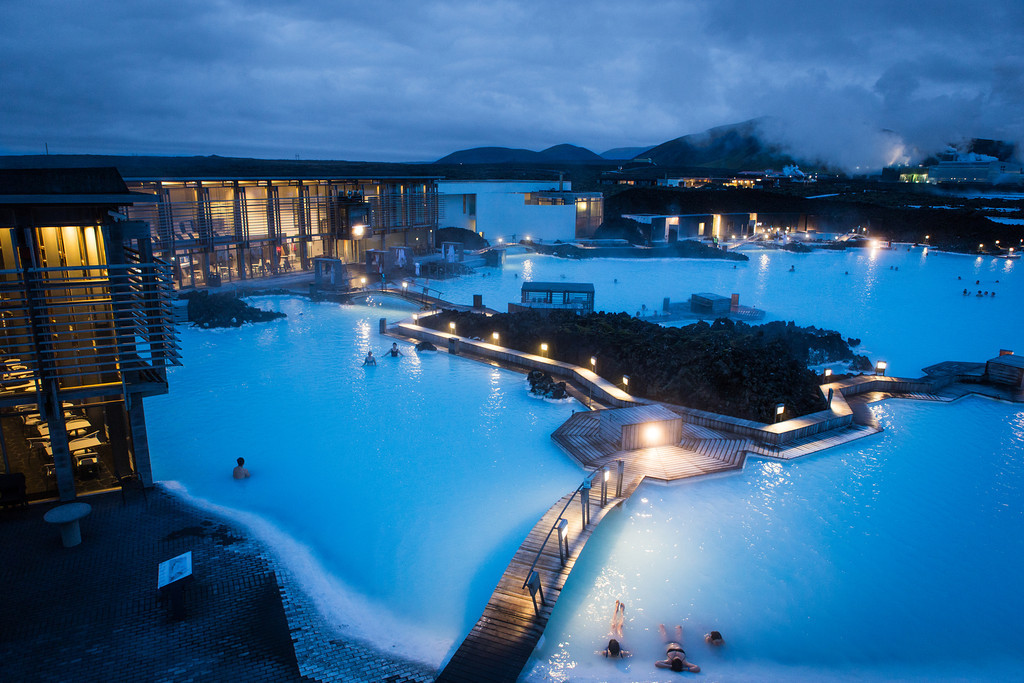
THE BLUE LAGOON
ICELAND
As one of Iceland’s most popular spas — renowned for its therapeutic waters — it is no great surprise that The Blue Lagoon draws in over 400,000 visitors annually. Allowing guests to commune with nature in six million litres of geothermal seawater, the spa is located in Iceland’s lava fields of Grindavik on the Reykjanes Peninsula. This scenic, and often extreme environment is the perfect setting for this mineral-rich spa that, as its website claims, affords guests the chance to “actually bathe between two continents as the Euro-Asian and American tectonic plates meet at the Blue Lagoon”. While soaking in the waters is said to do wonders for the skin leaving it supple and smooth, the all-natural spa also uses the silica mud surrounding the lagoon to help soothe troubled skin. Be sure to experience the sauna at the spa, which has been carved into the lagoon’s lava rocks.
Top Indulgence: The 30 minutes Silica Mud Mask treatment that is the spa’s signature treatment is legendry for its soothing, toning and rehydrating properties, leaving your face rejuvenated.  


THE AQUADOME SPA
AUSTRIA
Amply displaying more similarities with an eerie extraterrestrial habitation, than a spa, the Aquadome Spa that is situated in the Alps in Lӓngenfeld, Austria, seems straight out of the latest Hollywood sci-fi movie. From three levitating bowl-shaped pools with underwater music and light effects to thermal domes housing indoor pools, everything about this spa is so cool; you can’t help but want to go there to see it for yourself. With plenty of options to pamper you silly, this spa offers classic treatments along with a heady mix of aesthetic and cosmetic packages, along with bath ceremonies and rituals. So, if you can picture yourself floating across the surface of a heated pool while gazing up at the alpine peaks; the thermal Aquadome Spa is there to make it a reality!
Top Indulgence: The specially designed for men 50 minutes Mountain Force Sport Treatment is the ideal treatment for reinvigorating your stressed muscles with cupping, massaging and stretching actions employed to rebalance you.


THE LIME SPA
THE MALDIVES
While The Maldives Islands have so far been famous for their myriad underwater suites and restaurants, an underwater spa of this magnitude is a first. The Lime Spa at Per Aquum Niyama on the Dhaalu Atoll has taken that concept to the extreme by creating the world’s first underwater spa that offers natural treatments with a view of the ocean floor. Set within its own lagoon, The Lime Spa enables you to float through multi-day journeys of hydrating wraps, intuitive massages, couture facials and underwater dream therapies. It’s an immersive environment, designed to reflect the serene, aquatic surroundings — right down to the plush cushions that evoke a skin-friendly version of coral and sea sponges, to the ethereal fabrics created to look like kelp. In addition to the underwater and overwater treatment rooms, the spa is also home to Sublime, which offers pre and post-treatment relaxation with sauna, steam, an onsen shower, mist shower, ice room, and a relaxation lounge with panoramic views of the Indian Ocean as you spot exotic marine swim by. Trust us; Finding Dory was never this fun!
Top Indulgence: The 75 minutes Holistic Duo is the perfect couples’ treatment that includes an aromatherapy massage and a Himalayan singing bowl session that they guarantee will lull you both into a state of deep relaxation...


THE INTEGRATRON
USA
An acoustically perfect tabernacle and energy machine in the mystical Mojave Desert in south-eastern California, USA, The Integratron is a geomagnetic vortex desert spa offering some seriously alternative therapies to balance out your body’s Qi. Creator George Van Tassel, who was an aeronautical engineer and test pilot, claimed that the structure is based on the design of Moses’ Tabernacle, the writings of Nikola Tesla and telepathic directions from extra-terrestrials (yes, you read that right!). The giant dome structure offers sonic healing sessions to those seeking a one-stop shop for physical and spiritual healing. Known as ‘Sound Baths’, the sessions will have you resting comfortably in the deeply resonant, multi-wave sound chamber, while a sequence of quartz crystal singing bowls are played, each one keyed to the energy centres or chakras of the body.
Top Indulgence:  The 60 minutes All Sound Baths Sonic Healing Session that consist of 25 minutes of crystal bowls played live and the balance of the hour to integrate the sound and relax in the sound chamber to recorded music that results in waves of peace, heightened awareness, and relaxation of the mind and body.


THE TSCHUGGEN BERGOASE SPA
SWITZERLAND
Created to resemble vegetal forms and trees, the striking, geometric structures jutting from the Tschuggen Bergoase Spa in Arosa, Switzerland are a sight to behold with their vertiginous metal and glass shards that almost seem to piece the still, cool Alpine air. Set on 5,000 square meters of land, the spa provides an exceptional view of the rugged mountain terrain and allows natural light into the treatment rooms that are spread over four floors—some of them even underground and set into the mountain itself. Architect Mario Botta was mindful of the surrounding villages and natural environment, so he aimed to “build without over-building.” With Switzerland famous for its spas, the Tschuggen Bergoase Spa has plenty of treatment to choose from, using products from Sensai, Clarins, Comfort Zone, OPI and La Biosthétique for a truly indulgent experience. Moreover, the mountain  sauna  of  original,  ancient  rock  combined  with  the  various steam rooms  and  saunas  helps you rejuvenate with the energy of nature seeping in.
Top Indulgence:  The 50 minutes Men’s Facial is a personalised treatment using Clarins Men’s products, specially formulated for men’s skin types, designed to leave your skin feeling fresh, clear and rejuvenated.


THE GALOS SALT-IODINE CAVES SPA
USA
This haven of tranquillity slap bang in the middle of Chicago, USA, relies on the benefits of Crimean salt. Low levels of iodine in parts of the US make Chicago a perfect spot for this pastel-hued spa. Derived from the mysterious Black Sea, which is known to have healing effects on dysfunctions in the respiratory, digestive, nervous and cardiovascular systems, the Crimean salt is crystallised naturally to mimic these effects. While the crystallised salt itself has a delicate pink colour, the lights inside the caves subscribe to colour therapy and are arranged in a way to soothe your senses. With a plethora of treatments that offer healing baths, water treatments, inhalation and irrigation, and the faint flowery aroma of the salt, this unique spa is a culmination of overall wellness and relaxation. Besides its cosmetic benefits, a visit to Galos is beneficial to the body, as the air is intensively charged with salt particles and has a natural anti-infectious effect; it stimulates the immune system and is great for the skin. The sea microclimate created inside the caves provides an oasis of peace and relaxation. Ah, bliss!
Top Indulgence: The 45 minutes Balneotherapy session uses the minerals from water, peloids and gases for glowing skin and rids the body of toxins.  


(An edited version of this piece was first published in the March, 2017 issue of The Week's The Man magazine)