Showing posts with label MEXICO. Show all posts

Wednesday, November 1, 2023

Mexico's Dia De Muertos A Food and Drink Fiesta


(This article first appeared online on 1st November 2023 on Live Mint, India https://lifestyle.livemint.com/food/discover/food-day-of-the-dead-mexico-111698808010431.html)

Sunday, January 29, 2023

Mexican Cuisine


(This article first appeared in the 29th January 2023 issue of Deccan Herald newspaper's Sunday Herald section both in print and online here...  

Sunday, October 24, 2021

Sunday, November 1, 2020

Death and All His (Mexican) Friends!

Celebrating death in myriad ways, with no excuses made for its intimacy with life, is Mexico’s idea of a good time


By Raul Dias

There is a heartbreakingly beautiful saying in Mexico that goes something like this… “you never really die until your name is spoken for the last time”. 

This is perhaps why the concept of death in Mexican culture is one that is so unique and unlike any other in the world. As I travelled around this wonderfully ‘alive’ country a few years ago, I discovered that as much as they mourn death, Mexicans also celebrate it with joy and unbridled mirth. Bordering on a defiant nonchalance, one might even say. But not quite.

And there is no day more poignant than today’s North American holiday of Halloween to put the Mexican attitude towards death into perspective. Now, while the average American approaches death with fear, turning the dead into monsters—worthy, only of being paraded around as fancy-dressed, macabre creatures as they go ‘trick-or-treating’ about their neighbourhood—the Mexican prefers a riotous co-existence. All this, along a colourful path of both least resistance and total abandonment!   

Living Death

It is no great surprise then that one of Mexico’s most important festivals celebrates not life, but death with the greatest of abandon. Día de Muertos—which takes place on the second day of November each year all over Mexico—is a fusion of the Catholic feast of All Souls’ Day with the day of the dead of the pre-Hispanic Tarasco people of Michoacán. It is believed that the dead return to their earthly homes for one day. Quite like in the animated movie Coco (2017), the underlying philosophy here is that death is not a full stop put at the end of a life, but a continuation of it in a parallel dimension.

I was lucky enough to witness one such Día de Muertos in Mexico City that changed the way I looked at death forever. As much as two days before the festival, Mexicans visit the graves of deceased family members, adorning them with brightly coloured paper decorations and marigold flowers known locally as cempasúchil. The brightness of which, they believe, evokes the sun. Small gifts called ofrendas in the form of glittery, sugared skulls and dancing skeletons called calaveras are left behind at the graves by the relatives. This, after they spend at least 24 hours in the cemetery, communing with the dead in a sort of hybrid tailgate party-meets-picnic. Highlighted by plenty of eating, drinking and playing of music.   

Double, double toil and trouble

“Que buscabas?” was a question hurled at me by almost every smiling shopkeeper I encountered. “What are you looking for?” they asked. I found myself at the Mercado de Sonora on a rather chilly Autumn afternoon. Dedicated solely to witchcraft, potions, and other death rituals, this market located just southeast of Mexico City’s main center—in a neighbourhood known as Merced Balbuena—truly is the place to go to to get your freak on. 

To the average José, it might appear to be a normal place. Food stalls selling everything from tripe tacos to luridly-coloured fruit drinks called aguas frescas decanted into large glass containers are all lined up in neat isles. Letting my olfactory senses take lead, I sauntered down to the back. Into an area of the mercado that is not for the faint of heart.

Rows of shops peddling a virtual menagerie of dried up, dead animals and reptiles, from snakes to armadillos, come into sight. Tiny vials of love potions to more sinister ones of the ‘ruin-your-enemy’ kind were thrust under my reluctant nose for perusal. Soon I was accosted by a rather scary-looking woman and offered a quickie limpia con hueve. A harmless kind of spiritual cleanse, I was told that involves rubbing a fertilised chicken’s egg all over the ‘cleansee’s’ body, before it is smashed onto the floor to disperse off the bad vibes. I quickly skulked away into the incoming human traffic, profusely apologising in my terrible Spanish.

I had been warned that this might happen and to steer clear of it. The mercado is full of quacks and imposters, I was told by my friend Paz. A Mexico City local, Paz claims to have once been tricked into a similar limpia by a self-proclaimed witch, who turned out to be the market’s cleaning lady. 

Saints and sinners

I soon learned that on the first day of every month, thousands of people flock to an altar in a ramshackle part of Mexico City to honour a ‘saint’. One that the country’s all-controlling Catholic Church vehemently denounces. But this denouncement did not surprise me as I joined the thronging devotees on a morning that happened to be the first of November. The number one attraction of the city’s rather rough Barrio Tepito neighbourhood is the shrine dedicated to the scythe-brandishing skeletal figure of Santa Muerte (Saint Death), always garbed in a white sequined wedding gown.

Once again, blending pre-Hispanic rituals with that of Catholicism, Santa Muerte is said to be an avatar of Mictlantecuhtli, the ancient Mexican God of Death. Over the years, this dreaded figure has come to be associated with drug runners and gang members who look upon her as their de facto patron saint. Leaving her candles and bottles of tequila as part of their obeisance is the norm.

Getting into the ‘spirit’ of things truly seems to be a Mexican way of life!


TRAVEL LOG

Getting There 

As there are no direct flights linking India with Mexico, one can get into Mexico City via connecting flights from most major US airports. Travel within Mexico City is extremely easy with plenty of transport options including taxis, public buses and the super-efficient and cheap metro train system. Indians require a visa to visit the country that can be procured from the Mexican Embassy in New Delhi. However, the visa requirement is waived off for those in possession of a valid multiple entry US visa.   

Stay

In-keeping with a city of its mammoth size, Mexico City has every sort of accommodation option to suit all tastes and budgets. Located in the heart of the city in the Centro neighbourhood around Zócalo plaza, Downtown Mexico (www.downtownmexico.com) has a boutique hotel vibe with reasonable room rates, starting at Rs 2,100 for a double room without breakfast. Set in a modern building that is a short walk away from the Cuauhtémoc metro station, Gran Hotel Amazonas (www.hotelamazonas.com.mx) offers rooms starting as low as Rs 1,600 for a double without breakfast.

Tip

* If you are still craving some more chills and thrills, then head to the super-creepy floating Isla del las Muñecas doll island in the canal-infested Mexico City suburb of Xochimilco. Here you will encounter garlands of dolls festooned from almost every gnarly tree’s branch as well as the island’s spooky doll museum. 


(An edited version of this article first appeared in the 31st  October 2020 issue of The Hindu Business Line newspaper's BLink section on page 18 https://www.thehindubusinessline.com/blink/cover/mexicos-day-of-the-dead/article32978112.ece)

Saturday, February 8, 2020

Borderline Bizarre

An illegal U.S. border crossing simulation—as both a deterrent and for some hair-raising thrills—is the number one attraction at an amusement park in the central Mexican town of Ixmiquilpan. 


By Raul Dias

The stillness of the night, that has for the last half an hour or so, been interrupted only by the drowsy hum of cicadas and the occasional sharp intake of breath is suddenly punctured by the shrill, polyphonic blaring of sirens. An enormous hummer, all lit up in flashing blue and red lights comes to a screeching halt. Four armored men wearing bullet-proof vests emblazoned with the words ‘U.S. Border Patrol’ spill out of the vehicle. Their 9mm handguns trained on our motley bunch of eight.
One of the Mexican guys in our group attempts an escape as he runs towards the river. “No van a cruzar el rio!”, a stocky border patrol agent yells at him in Spanish while firing a blank at the ground. “None of you are going to cross the river tonight,” he repeats, this time in accented English for the benefit of a few of us non-Mexicans.
We had been warned that this would most likely happen. And just like that we soon come to the grim realisation that our game is up. Quite literally.

The Night Walk
First things first. Everything mentioned in the above reimagination of that freezing cold night in September did take place. And no, it isn’t a fragment of some dystopian dream. Nor was I, contrary to what it might seem, attempting to illegally enter the United States of America.
Our ‘capture’ was, in fact, the culmination of a weekly four hour-long border crossing simulation activity offered by the Parque Eco Alberto, an amusement park in the central Mexican town of Ixmiquilpan. Earlier that day I had paid 350 Mexican pesos (Rs 1,320) to experience a ‘lite’ version of what thousands of people go through every single night of the year. All in the hope of making it to the ‘promised land’ on the other side, the United States of America.
Known as La Camina Nocturna or The Night Walk, the simulation has been taking place at the park every Saturday night since July 31, 2004. The walks are stewarded by locals, many of whom have tried to illegally cross into the U.S. themselves. And although the park is some 700 miles away from the actual Mexico-U.S. border, the experience can get alarmingly real as it creates conditions increasingly difficult to deal with.

Perilous Beginnings 
Just like an actual illegal crossing deal, we are first introduced to our ski mask-clad guide, Macario Simon Reyes. The 38-year-old plays the role of el coyote as the human smugglers are known as in this part of the world. We assemble for prayers and a briefing in an abandoned white stucco Catholic church. It is here that we are warned about everything from the threat of kidnap at the hands of narco-traffickers to the possibility of dying from desert condition extremes such as heatstroke and hypothermia and even being eaten by wild animals.
“And if this seems extreme, reality is a whole other deal,” says Macario. “Many think that the simulation serves as a sort of training for illegal border crossings. But what we are doing couldn’t be more opposite. Our mission is to help stop the emigration by acting as a deterrent to those who might be thinking of doing so. It’s very difficult in reality. It’s very ugly”
For close to five hours one is expected to belly crawl through tunnels, march through mud and ford the Tula River that stands in for the infamous Rio Grande at the border. All this, while trying to avoid getting caught by la migra, as the border patrol agents are nicknamed.

Nunca Más
The park itself, I’m told, is partly funded by the government and communally owned by the indigenous Hñahñu tribe who live on 3,000 acres of land scattered across the state of Hidalgo. Interestingly, Macario tells me that at one point over 80% of Hidalgo’s population was lost to emigration, leaving Ixmiquilpan almost a ghost town. But not today. The population has increased over the years by almost an eighth. This he attributes not just to the deterrent message that the simulation conveys to the town’s youth, but also to the many jobs that it has created for the community. So much so that a recent report by U.S. Customs and Border Protection suggest that illegal crossings along the southern border are down by 72% in December 2019 compared to May 2019.
As we silently cross a barren field that we’ve been told might have rattlesnakes slithering around, I get talking with 19-year-old Pilar and her twin brother, who ironically shares my name, Raúl. “We left Mexico with our parents and illegally crossed the border into the U.S. when we were 10. But after being deported five years ago and to warn us of not attempting it on our own, our dad sent us here as an important reminder of what we went through.”
As we get debriefed by Macario after being ‘released’ by the faux border patrol agents, I ask the twins if the simulation was what they had expected. “We thought that it would be a lot easier. But it isn’t,” says an exhausted Raúl. “Since we’ve been back from the U.S., our whole family has come to cherish the liberty we have here in Mexico. No more running and being chased anymore. Never again. Nunca más!”         

Travel log
Getting There 
As there are no direct flights linking India with Mexico, one can get into Mexico City via connecting flights from most major US airports. From Mexico City, Ixmiquilpan is a pleasant three-hour bus journey away. Travel within Ixmiquilpan and to the Parque Eco Alberto is relatively easy with plenty of transport options including inexpensive taxis and public buses. Indians require a Mexican visa to visit the country that can be procured from the Mexican Embassy in New Delhi. However, the visa requirement is waived off for those in possession of a valid multiple entry US visa. 

Stay
Being a relatively small town, accommodation options are limited in Ixmiquilpan, but there are a few decent, if a tad basic, hotels and guesthouses to spend a night or two in. One such option is the super low-key, but spotlessly clean Hotel Avenida Ixmiquilpan (www.hotelavenidaixmiquilpan.com.mx) with rooms overlooking a garden on the Avenue Insurgentes. Here, one can expect to pay around Rs 1,882 for a double room without breakfast. One for the few three star properties in town and one with an outdoor pool, Hotel Posada Centenario (www.posadacentenario.com) in the heart of the city has some really nice double rooms for around Rs 2,447 without breakfast.

Tip
* Besides being a hot springs town that is full of places where you can enjoy a soothing outdoor mineral bath, Ixmiquilpan also has a strong cultural side to it. The convent of San Miguel Archangel is famous for its blend of decorative styles. While the church’s wings on either side have murals in the Spanish style brought in by the Augustinian priests, its central nave has on its walls and ceiling frescoes by the indigenous Otomi Tlacuilos tribe.

(An edited version of this article first appeared in the 8th February 2020 issue of The Hindu Business Line newspaper's BLink section on page 20 https://www.thehindubusinessline.com/blink/takeaway/simulated-illegal-border-crossing-in-a-mexican-amusement-park/article30751969.ece)


Friday, November 1, 2019

The Magical Christmas Quintet!

From a traditional white Christmas in Finland to an Aussie one where having a beach barbeque is the norm and a whole lot more exotic experiences in between, Raul Dias celebrates the diversity in Yuletide festivities from five unique parts of the world. 


By Raul Dias 

Celebrating with Santa
Rovaniemi in Finland
There is probably no other place in the world than Rovaniemi, Finland to spend the ultimate Christmas Day of your life. For it is this snow-blanketed, tiny town, neatly tucked away in the far north of the country’s Lapland that is considered the ‘Official Hometown of Santa Claus’. A month before Christmas, the festivities are put into full throttle here as Santa Claus declares the Christmas season open in Santa Claus Village. Another highlight of the year is December 23rd, when Santa departs on his mission to hand out presents to children all around the globe. And not to forget good old Rudolf, for Rovaniemi is also home to countless reindeer that one can interact with and even go on a sledge ride with. For those travelling with children, SantaPark is a must visit. It is at this underground toy factory where Santa’s elves create all the presents for children around the world. It’s a wonderful place for children to explore and a fantastic place to get in the spirit of Christmas in Lapland.

Tacos, Tamales, Tequila, anyone?
Mexico City in Mexico
It is in mid-November each year, when the Christmas festivities are kickstarted in bustling, colourful Mexico City. This takes place with the lighting of the Christmas tree in the Liverpool Insurgentes mega store on the third Saturday in November. It is THE most visited store during Yuletide season by Mexican families, for its Christmas village is one of the most spectacular and entertaining of the city. Besides the impressive Christmas tree, it features an ice slide and activities for children to write their letters to the Three Wise Men. From then on, families begin to prepare for the holidays where plenty of food, fun and colour define the fiesta. Think copious amounts of traditional Christmas delicacies like a large fritter known as a buñuelo, ponche navideño (a Christmas fruit punch) along with the usual Mexican cuisine staples of tacos and tamales stuffed with turkey—all washed down with some tequila. Christmas markets like the one organised in the Coyoacan Market or the Grand Christmas Bazaar in the Lázaro Cardenas Market are also wonderful places to get the festive vibe going. Another magical place in Mexico City during Christmas is the Zocalo square in the heart of the city where a giant ice rink is set up for people to skate and make merry.

Christmas in January
Lalibela in Ethiopia
Probably the most unique Christmas celebrations, and not just on this list, but in the world, Lalibela in Ethiopia does its version of the festivities very, very differently. For starters, Ethiopia celebrates Christmas on January 7th, not December 25th. Called Ganna, Christmas here is preceded by a special Advent fast for 43 days before Christmas. It starts on 25th November and is known as the ‘Fast of the Prophets’ or Tsome Nebiyat. During this time, traditionally only one vegan meal is eaten each day. On the day of Ganna, people get dressed in white, wearing a traditional shawl-like garment called a netela. It is a thin white cotton piece of cloth with brightly coloured stripes across the ends. People go to mass on Christmas Eve (called the Gahad of Christmas) at 6.00 pm and the service finishes about 3.00 am on Christmas Day, making it one of the longest and yes, most fascinating Christmas services! This is followed by a traditional Christmas feast that includes a thick stew called wat which can be made with meat, vegetables and eggs. The stew is eaten with roll of injera which is a flat fermented bread made from an indigenous Ethiopian grain called teff.

Joyeaux Noël
Montreal in Canada
Infused with a deliciously French flavour, given the city’s deep French conection, Christmas in Montreal is celebrated very differently than it is in other parts of Canada. Simply called ‘Noël’, it begins with the Défilé du Père Noël, aka the Montreal Santa Claus Parade that has been a tradition since 1925 with about 15 to 20 floats proceeding along the downtown artery and top shopping destination, Ste. Catherine Street, from Fort to St. Urbain. Another beautiful way that Christmas is celebrated here is with the Montreal Christmas Parade (Marche de Noël aux flambeaux) where one can join in the candlelight procession with over 10,000 other people to celebrate the season along with Christmas carolers who walk along the route from the city’s L’Avenue du Mont-Royal. As for those all-important Yuletide treats, you can indulge in an array of goodies like the ‘Bûche de Noël’ Yule log, pork pies called tourtières and yummy gruyère gougères, bursting with the goodness of cheese.

Beaches, BBQs and Bikinis
Sydney in Australia
Surprising as it may sound, but some of the best Christmas Day feasts in Sydney involve going to the city’s many beaches, donning bikinis, board shorts, thongs (as flip-flops are called in Australia) and indulging in a grand barbeque feast with family and friends, where plenty of grilled turkey, burgers and ice-cold beer take center stage. Iconic beaches like Bondi, Tamarama and Manly are the most popular ones to hang out at and enjoy the blazing Christmas summer sun while working on that festive tan. But this is not to say that some of the more typical trappings of a ‘traditional’ Christmas are totally ignored by our friends down under. In fact, the Yuletide festivities are kicked off on the last Saturday of November when Santa Claus and Sydney’s Lord Mayor light the giant Christmas Tree at a family concert in Martin Place. Another popular thing to do during the season is to check out the beautifully decorated Christmas window display dioramas at the David Jones store opposite St James Station, which each year tell a different Yuletide story.

(A shorter, edited version of this article first appeared in the Oct-Nov-Dec 2019 issue of HDFC Imperia magazine)


Tuesday, December 4, 2018

10 Reasons to Do Mexico!

From its mystery-shrouded ancient sites and hedonistic seaside havens to some of the best food and art that will leave you spellbound, Mexico has a lot on offer for the intrepid traveller. We bring you our top 10 reasons why this vibrant Central American nation should feature on your travel bucket list for 2019.     


By Raul Dias

1. Pre-Columbian wonders
It is safe to say that Mexico has the greatest concentration of some of the most stunning manmade structures of the ancient world. Just 50km form Mexico City in the ancient Aztec site of Teotihuacán, the two giant pyramids of the Avenue of the Dead and the Temple of Quetzalcóatl stand out in their magnificence. Another must-visit is the great pyramid of Cobá called Nohoch Mul which is the highest Mayan building on the Yucátan Peninsula. Still in the Yucátan, make sure to pay obeisance at the time temple of El Castillo at Chichén Itza to know what communing with divinity feels like.
 
2. Vibrant festivals
Perhaps one of the few countries in the world, where death is celebrated with so much fervour, come early November and Mexico puts on a ‘spooktacular show’ for the Day of the Dead or Dia de Muertos. Luridly coloured, jazzed up candy skulls, ghoul face-painted revellers and effigies of La Calavera Catrina (the seductive female skeleton) can be seen everywhere. Interestingly, unlike other popular festivals like Semana Santa, La Morisma and Carnaval, Dia de Muertos is not only a Catholic festival, but also one that is celebrated by indigenous communities like the Purépecha of Michaocán who spend the night partying at graveyards. Speaking of indigenous festivals, others like the grand vernal and autumnal equinox festivals are celebrated at the revered Chichén Itza site in March and September respectively. 

3. More than just tacos!
While the much-worshipped corn dough or masa may be the lynchpin for most dishes that come under the ambit of what we recognise as being Mexican cuisine—with the ubiquitous tacos and quesadillas being the most famous exports—there is a whole treasure trove of hidden edible delights, that will make your gastronomic quest in Mexico a rewarding one. Regional dishes like the pre-Columbian, orange juice-marinated roast meat cochinita pibil from the Yucatán Peninsula, pescado zarandeado or grilled fish wrapped in banana leaf from Nayarit and the zesty, hominy-rich pozole soup from Jalisco are sure to up the exotic foods ante, if that’s what you’re looking for. For the true-blue adventurous palate, there are plenty of surprises in the form of San Luis Potosi’s flower of the barrel cactus dish called cabuches or perhaps armadillo en adobo where the name says it all!

4. Sun, sea and surf
Coastal Mexico is that kind of a place where every single one of your beach-related fantasies come alive! Think sipping potent pina coladas at a palm frond-thatched bar or enjoying an afternoon siesta snugly ensconced in a cabana and they all come to fruition at some of the country’s best beach resort destinations. Iconic places like Cancun where the sand is the softest or Playa Maruata whose Michoacán Beach is infested with black sea turtles are just a few. Jutting out like a long limb, the Baja California Peninsula is home to the famed Cabo San Lucas, a resort city at its southern tip which is the perfect spot to indulge in adventure sports like surfing and snorkelling and post that, some hardcore nightlife at its world-class clubs.

5. Drinks that defy convention
Long before the world and its best friend went berserk over the blue agave-produced tequila and its close cousin mezcal, the ancient Mexicans got their kick from indigenous drinks like atole. Made by boiling corn in milk or water and then sweetened with either sugar or piloncillo (a cane sweetener), atole is a fermented drink that’s very popular in Mexico to this day. Another indigenous drink from the region of Veracruz, aguardiente, which literally means ‘fiery water’ is an unrefined alcoholic drink that’s truly for the adventurous. Want to stay off the sauce? Available at almost every street-side corner around Mexico are a range of icy, fruit-based drinks called agua frescas where the tamarind flavoured one trumps all. Made from rice, almonds and cinnamon, horchata is another unusual, but yummy drink as is the spicy, sugar-free Mexican hot chocolate made from dairy-free dark chocolate that’s often spiked with chilli. 

6. Art for all!
There is little doubt that at the very forefront of Mexico’s dynamics art scene is the enigmatic couple, Frida Kahlo and Diego Rivera. While the former’s bold and colourful pieces can be found superbly curated at Mexico City’s Museo Frida Kahlo, Rivera’s great murals that show a slice of the country’s history and cultural identity are best represented at the Secretaria de Educacion Publica and at the Palacio National, both also in Mexico City. Head out to Capula at the foothills of Michoacán for an eyeful of the weird and wonderful sculptures at artist Juan Torres’ property. For some pre-Hispanic art, check out the Olmec Heads in the Gulf of Mexico that date back to 900BC.

7. Mayan Mexico
Wielding perhaps the greatest clout of all of ancient Mexico’s civilisations, the Mayan influence on the country is best celebrated at places like Tulum and Palenque with its exquisite palaces, tombs and temples decorated with carvings and paintings. For a glimpse of modern day Mayan life (yes, it exists) take a detour to the mountain town of San Cristóbal de Las Casas which is surrounded by traditional modern Mayan villages that we swear aren’t oxymorons!   

8. Nature’s bounty
Not many would know this, but seven of the eight species of sea turtle in the world nest along Mexico’s beaches, making turtle conservation sanctuaries like El Tortugario near Cuyutlán a must visit. The cactus forest of the Zapotitlán Salinas zone of the Tehuacán-Cuicatlán Biosphere Reserve shows you just how important cacti are to Mexican culture. But if there is one place we would recommend you devote all your nature love to, then that would have to be to the bright blue Agua Azul waterfalls on the Xanil River in the southern Mexican state of Chiapas.

9. Colonial vestiges
Bringing to Central America a decidedly European flair are Mexico’s colonial strongholds like Puebla and Monterrey with their well-preserved zocalos (town squares), churches and world class museums. Other places like Zacatecas on the edge of the northern desert with its brilliant colonial architecture and the walled city of Campeche famous for its bastions that once defended the city from pirates should feature on your colonial Mexico itinerary. 

10. The sporty side of life
Known as fútbol, soccer is the de facto national sport where the national team El Tri (the tricolour) are revered like Gods. Check out a match at Mexico City’s Estadio Axteca and soak up the unbridled passion that the fans display. Borrowed from their northern neighbour, USA, baseball too is a very popular sport with the two strongest clubs being the Tomateros and the Naranjeros. Popular in the north of the country, charreadas or rodeos are fun as are the highly dramatised lucha libre wrestling matches held all over Mexico. But if there is one sport that you won’t find anywhere else in the world then that would have to be the Mesoamerican indigenous game of ulama as it is called in Sinaloa, where a rubber ball is meant to be kept off the ground by two teams by all means. And yes, the operative words here being ‘all means’!


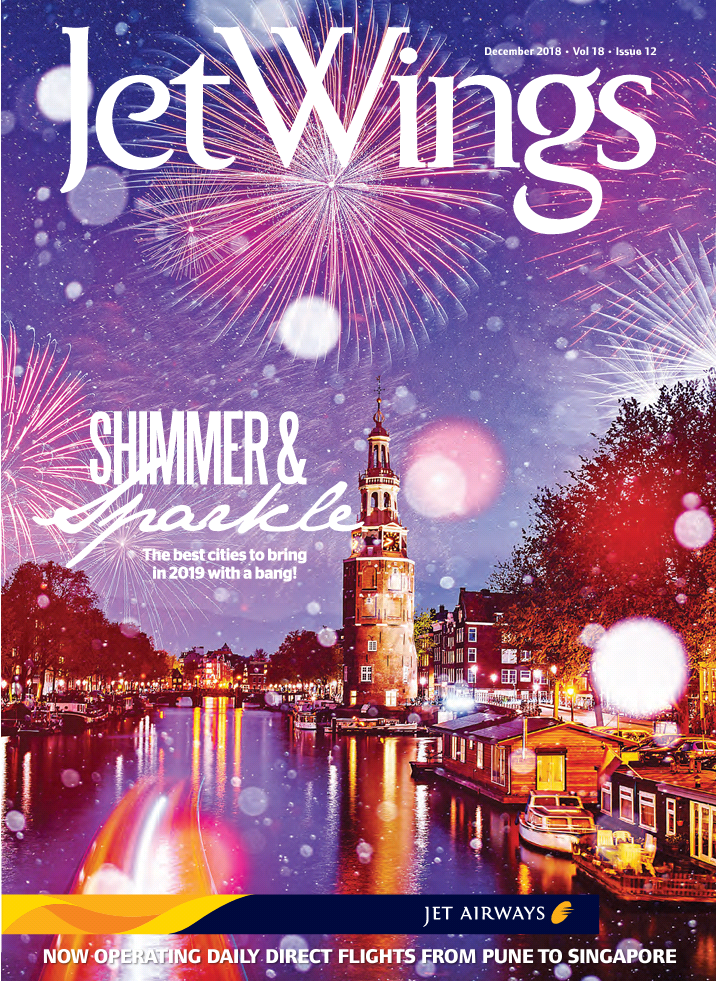
(An edited version of this article first appeared in the December 2018 issue of Jetwings Domestic in-flight magazine of Jet Airways http://www.jetairways.com/EN/IN/jetexperience/magazines.aspx)


Thursday, October 4, 2018

Between Breads


From its frugal beginnings—when it was put together by the 4th Earl of Sandwich as a quick-n-easy hunting trip snack to its various gourmet avatars available today—the ubiquitous sandwich sure has come a long way. As gourmands across the world prepare to celebrate the annual International Sandwich Day on the 3rd of November, we bring you a serving of a few famous sandwiches from around the world


By Raul Dias

The Philly Cheesesteak, USA
As its name suggests, this iconic submarine-style sandwich has its origins in the state of Philadelphia and the city of Boston to be more specific. So, what we have here is a long hoagie bread roll holding within its soft center, thinly sliced slivers of meat and grilled sweet, white onions all slathered with the luridly yellow coloured Cheese Whiz cheese sauce. And while the rest of America and even the world has produced several, rather ersatz iterations of the Philly Cheesesteak sandwich, the original is a true-blue Bostonian. Right down to legendary ‘war’ between two rival cheesesteak sandwich shops Pat’s and Geno’s, located bang opposite each other at the triangular intersection of 9th St, Wharton St and Passyunk Ave. in the city’s South Philly neighbourhood.

The Bánh Mì, Vietnam
As a lasting ‘legacy’ of its French colonial past, Vietnam’s most iconic street-side snack the Bánh Mì has more than a few elements that reference the, well…French connection! A mini French baguette also called a bánh mì is split lengthwise and layered with a fusion of meats and vegetables from Vietnamese cuisine such as chả lụa sausage, fresh coriander, cucumber ribbons, and pickled carrots and daikon radish, combined with condiments from French cuisine such as pâté along with jalapeño chillies and a sweet-spicy mayonnaise. A typical Saigon dish, the Bánh Mì came into being after the 1954 Partition of Vietnam when migrants moved from North Vietnam to South Vietnam, putting their stamp on Saigon’s local cuisine. Today, one of the best places in Ho Chi Minh City, as Saigon is known as today, to try a Bánh Mì is at the Bánh Mì Bùi Thị Xuân restaurant in the Phạm Ngũ Lão backpacker ghetto.

The Torta Ahogada, Mexico
Like most great sandwiches, the Torta Ahogada has extremely humble underpinnings as a working man’s lunch. Here the porous, yet firm birote bread which has a thick, crunchy crust and softer interior is filled with slices of fried meat or chicken along with cheese and beans. The sandwich is then dunked into a vat of sauce made from vinegar, arbol chilies, garlic, oregano, and other spices and served in its soggy state with a side of tortillas, onion rings and slices of cooling avocado. Invented in the early 1900s in the Mexican city of Gudalajara—with the word ‘torta’ meaning sandwich and ‘agohada’ meaning drowned—several theories abound as to its genesis. One such belief is that the sandwich maker accidentally dropped his freshly made torta into a pan of chilli salsa and his customer loved it so much he kept repeating his ‘mistake’ to remarkable success. But whatever be its origins, one thing is clear: this spicy, messy sandwich is a multisensory treat!

The Balik Ekmek, Turkey
One of the best things about this humble fish sandwich called Balik Ekmek (literally meaning “fish bread”) is that you don’t have to look too hard to find one to treat yourself with when in the Turkish capital of Istanbul. Simply let your olfactory senses lead you to the nearest boat selling this street…err, we mean waterside delicacy! On either sides of the city’s mighty Galata Bridge, in the waterfront neighbourhoods of Eminonu and Karakoy, you can find boats lined up with makeshift grills set up on them dispensing these yummy treats for around 5 Turkish Lira (Rs 56) a piece. What you’ll get is a sturdy round Turkish bread stuffed with a deboned filet of either grilled or fried oily fish such as sardines or mackerel topped with hot sauce and accompanied by sides of raw onion rings, radish, lettuce and a wedge of lemon.   

The Chip Butty, UK  
While this aberration of a sandwich might sound like a carb-on-carb keto diet nightmare, let us assure you that one bite of this classic, yet insanely simple British sandwich and you’ll surrender to its charms. Known as a ‘butty’ in the local vernacular, a sandwich is that quintessential British snack whose avatars are numerous, from the dainty cucumber and watercress ones to the cholesterol-rich bacon butty. For a chip butty, you’ll need to pile on two slices of buttered, thick white sandwich bread with another classic, chips—that we know of as thick cut fries—and slather it all with bright red pumpkin and tomato ketchup. And voila, you’ll be staring down at a typical post binge drinking treat that can be found at almost any fish and chip shop across the country.   

The Po’ Boy, USA
Shrimp, crawfish, lobster, oyster you name it and it can be found in a typically New Orleans, Louisiana style Po’ Boy sandwich. A corruption of the term ‘poor boy’ as it was the most preferred meal of the striking streetcar conductors in 1929, the sandwich evolved from the1800s fried oyster sandwiches on French loaves to include any breaded, deep-fried mollusc or crustacean loaded onto French bread and dressed with lettuce, tomato, pickles, and mayonnaise. Though essentially a seafood sandwich, places like Texas have been known to put own their spin on a Po’ Boy with versions that come stuffed with BBQ meat and chicken. But for the real deal, head down to joints like Avery’s On Tulane along New Orleans’ Tulane Ave. for a taste of the divine that defies explanation.

The Smørrebrød, Denmark
Proving to the world of casual cuisine that a sandwich isn’t always about two pieces of bread holding forth fillings, this Danish classic open-faced sandwich may be a mouthful to pronounce, but the sheer mind-boggling varieties of Smørrebrød will leave you salivating. A typical Smørrebrød is usually constructed out of a slice of buttered rye bread called rugbrød, known for its dense crumb and deep brown hue. Called pålæg, which translates as “lay-on”, the toppings range from cold cuts, slivers of meat or fish, cheese or spreads. But hands down the most popular of all pålæg has got to be cured salmon called gravad laks that’s further topped off with a frond of dill, a splodge of sweet mayonnaise and sent off with a squirt of lemon juice. 


Oddities of the Sandwich World
* At $214 a pop, the title of the World’s Most Expensive Sandwich would have to go to “The Quintessential Grilled Cheese Sandwich,” that’s made by New York City’s legendary Serendipity 3 restaurant. Besides holding unfathomable bragging rights within its folds, the sandwich is made up of two slices of French bread that has Dom Perignon champagne and 23-karat gold baked into it. It is stuffed with caciocavallo podolico, a rare cheese imported from southern Italy and brushed with white truffle oil and gold leaf before it meets the grill.
* Ever heard of the ‘Candwich’? An American company produces these rather bizarre sandwiches in a can! Yes, each tin contains a bread roll and an assortment of flavours, including Peanut Butter and Jelly and Honey BBQ chicken. ‘nuff said.
* As an homage to the King of Rock and Roll, Elvis Presley, The Elvis sandwich is stuffed with an odd assortment of ingredients Elvis was particularly partial to all his life. So, we have peanut butter, banana and bacon ensconced within slices of commercial white bread and grilled with dollops of butter slathered onto the whole thing.
* In Japan, one of the most popular kinds of sandwiches is the Fruit Sando where sweet, soft white cake-like bread is stuffed with whipped cream and a whole ‘orchard’ of fruits from the most popular being strawberries to the downright strange persimmon and musk melon.

(An edited version of this article first appeared in the October 2018 issue of Jetwings Domestic in-flight magazine of Jet Airways http://www.jetairways.com/EN/IN/jetexperience/magazines.aspx)


Tuesday, July 3, 2018

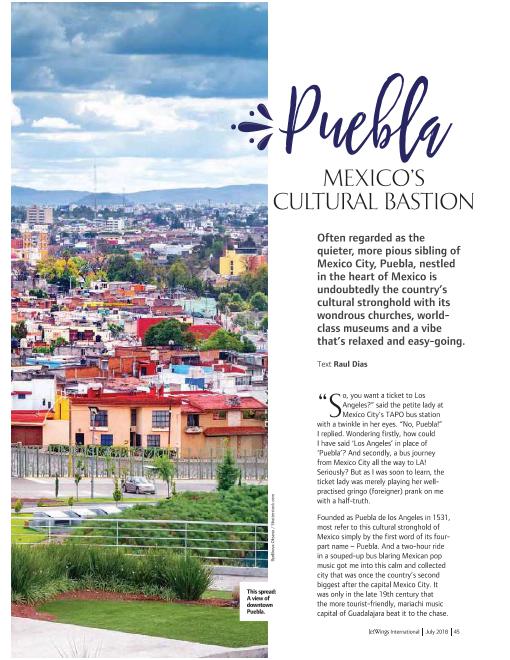
Puebla: Mexico’s Cultural Bastion


Often regarded as the quieter, more pious sibling of Mexico City, Puebla, nestled in the heart of Mexico is undoubtedly the country’s cultural stronghold with its wondrous churches, world-class museums and a vibe that’s relaxed and easy-going.  


By Raul Dias

“So, you want a ticket to Los Angeles?”, said the petite lady at Mexico City’s TAPO bus station with a twinkle in her eyes. “No, Puebla!”, I replied. Wondering firstly, how could I have said ‘Los Angeles’ in place of ‘Puebla’? And secondly, a bus journey from Mexico City all the way to LA! Seriously? But as I was soon to learn, the ticket lady was merely playing her well-practised gringo (foreigner) prank on me with a half-truth.
Technically called Puebla de los Angeles, most refer to this cultural stronghold of Mexico simply by the first word of its four-part name—Puebla. And a two-hour ride in a souped-up bus blaring Mexican pop music got me into this calm and collected city that was once the country’s second biggest after the capital Mexico City. It was only in the late 19th century that the more tourist-friendly, mariachi music capital of Guadalajara beat it to the chase.

Lost and Found!
Blame it on the beauty of Puebla that had me mesmerised, or simply on the language barrier, but neither my combi driver nor I had realised that we had driven past my intended stop, the town square called the zocalo. I had hopped into his fume-spewing vehicle a good half an hour ago, after my intercity bus had deposited me at Puebla’s strangely quiet CAPU bus station. And by now we were way out of the historic center.
To be more precise, I was very close to something I had heard about but had no intention of visiting—Africam Safari. This self-drive through faux safari park is on the road to Presa Valesquillo and is said to be home to a number of native and exotic wildlife. Quickly hailing a passing taxi, whose driver thankfully spoke a bit of English, I headed back down the road towards my intended stop.
Dotted with a cornucopia of cafés and restaurants, with canoodling couples, buskers and balloon sellers aplenty, the zocalo is akin to a circus on steroids and perhaps the only place where Puebla sheds its ‘calm cloak’. No wonder then that it was once the city’s main marketplace where everything from bullfights to public executions took place—often at the same time! Today, this tree-lined square is where the weekly Thursday changing of the flag ceremony takes place amidst great nationalistic fervour.   

City of Churches
There simply is no denying the fact that Puebla truly is Mexico’s most pious city with its denizens, the criollo poblanos often being accused of having a holier-than-thou attitude, both literally and metaphorically. In fact, there is a famous (if a tad exaggerated!) saying that Peubla has 365 churches, with one for every day of the year. But in reality, it’s a more conservative number of 70 that dot the Centro Historico or historic center.   
And this fact was reiterated to me time and again as I sauntered through its cobblestoned alleys and lanes dotted with buildings clad in the colourful azulejo-style tiles. I made my first obeisance-worthy stop at the mother of all Puebla’s ecclesiastical wonders—the Cathedral. As one of the largest in Mexico, this baroque cathedral is just south of the zocalo. Here, it occupies an entire city block and its gargantuan proportions were certainly not lost on me. Its 69 meters-tall twin towers soar above a nave that’s decorated with frescos and flanked on either side by 14 chapels. Dedicated to the Immaculate Conception, the cathedral even finds a place for itself on the face of a $500 Mexican dollar bill.

Of Museums and Then Some More…
Rivalling its church-prowess is the sheer number of museums one can find here. Ever the train geek, thanks to a grandfather who spent all his working life with the Indian Railways, I decided to make the Museo Nacional del Ferrocarril my first museum stop. Once again, located in Puebla’s Centro Historico, at the city’s former train station to be more specific, this railway museum has a superb range of exhibits, from a well-preserved steam engine to pictures of derailments and other locomotive disasters. The latter, strictly for those with a predilection for morbidity! 
Housed in two adjoining historic buildings, the Museo Amparo is a private museum and a treasure-trove of both Hispanic artefacts and pre-Hispanic religious iconography, including a couple of highly decorated human skulls. Another deeply-rooted passion of mine—food—led me to the Museo de Arte Popular Poblano. Set in a former 17th century convent in who’s kitchen the city’s most famous dish Mole Poblano (see box) is said to have originated, the museum today has on display cooking utensils and implements along with a staggering collection of pottery and indigenous costumes. 

The Indian Connection
Having heard a lot about it from Lucio, my friend and host in Mexico City, I simply had to make the Templo de la Compañia de Jesus, a Jesuit church my final stop for the day. Located on the corner of the intersection of the Avenue Palafox y Mendoza and Calle 4 Sur, the church has an interesting Indian connection to it.
Legend has it that a lady called Catarina de San Juan, and better known as ‘China Poblana’, was an Indian princess from Cochin who was kidnapped and enslaved by Portuguese pirates in the mid-17th century and later sold to a Pueblan man called Miguel de Sosa. When Sosa died a few years later, she was freed and took refuge in the church’s attached convent where she lived till her death in 1688. Today, the church is famous for La Tumba de la China Poblana which is what her grave is called lying in the church’s sacristy.
    

Puebla on a Platter
There’s very little doubt that compact little Puebla is the place where some of Mexico’s most iconic and popular dishes originated. Be they of the ubiquitous street food variety or highly sophisticated, complex creations, the Poblanos sure know how to put on a spectacular show with their preparations.
Here’s a serving of some of Puebla’s most famous contributions to Mexican gastronomy.
* Mole Poblano: This spicy, dark-hued sauce that’s ladled over everything from boiled turkey to rice is a laboriously prepared dish with over 30 ingredients, ranging from chocolate to cinnamon and get this…cracker biscuits!  
* Tacos Arabes: Inspired by the Lebanese immigrant community in Puebla, here meat and cheese are wrapped in pita bread instead of corn tortillas.
* Escamoles: Not for the faint of heart, these rice-like ant larvae are first sautéed in butter and then eaten ensconced in a soft tortilla.
* Chiles en Nogada: Large green chilies are stuffed with dried fruit and meat and are covered with a creamy walnut sauce and garnished with red pomegranate seeds. Depicting the colours of the Mexican flag, this delicacy is generally served during Mexico’s September 16 Independence Day celebrations.
* Camotes: One of Puebla’s most beloved sweet treats, these cigar-shaped rolls of colourful coconut wrapped in wax paper can be found peddled from every street corner.

(An edited version of this article first appeared in the July 2018 issue of Jetwings International in-flight magazine of Jet Airways http://www.jetairways.com/EN/IN/jetexperience/magazines.aspx)


Tuesday, August 1, 2017

The Many Mexico Citys

With its ancient Aztec underpinnings firmly in place—while still proud of its Hispanic heritage—Mexico City is a curious blend of several cultures and artforms that add myriad facets to its multi-layered countenance. Thus, making the bustling Central American megapolis, one the world’s most fascinating cities to visit! 


By Raul Dias

It wouldn’t be an overstatement to say that probably not many of us are aware that Mexico City is home to most number of museums in the world at over 160. Or that city also has over 100 art galleries, and 30 concert halls. Or that it is home to the oldest university in the Americas; the National Autonomous University of Mexico (UNAM), also a UNESCO World Heritage Site.
And it is these very impressive statistics and kudos-worthy achievements that are glossed over, as the city is often, rather unfairly vilified for having the exact same problems most cities its size are prone to, such as pollution, overpopulation and alarming traffic snarls.
But overlook its scars, tune out its din and ignore the incessant blaring of horns, and you will find yourself enjoying a city that truly was made to be appreciated and savoured. From the artistic oeuvres of the world of Frida Kahlo to the national pride-saturated National Palace and the Zócalo square at its heart, Mexico City is also the place where the wonders of an ancient civilization are very much alive and kicking to this day.
It is this same multi-layered countenance that makes it one of the world’s greatest cities to not just visit, but be a part of.

Ancient Ground Zero
As the single most definitive place to get a feel of Mexico city’s ancient Aztec pulse, the Zócalo is ironically at the very heart of the city—both geographically and metaphorically. This gargantuan square, with the enormous Mexican national flag bearing pole at its center, is believed to be the place from which the city sprung up after an eagle was spotted perched on a nopal (cactus) plant with a snake in its beak. This very same eagle-with-snake motif is the national emblem of Mexico today. Over the years, the Zócalo then became a gathering place for the local Aztec people, the site of Mexican ceremonies, the swearing in of viceroys and royal proclamations when it was the ‘Ground Zero’ of the Aztec capital Tenochtitlan.
Now days, known by its more formal name, Plaza de la Constitución, it plays host to military parades, modern religious events such as the festivals of Holy Week and Corpus Christi and most importantly, the grand Independence Day ceremony of 16th September which sees the entire city erupt in national fervour and pride every year.

Culture Confluence!
The Zócalo is also flanked by some of the most important buildings in Mexico City making it a great confluence of cultures. The most venerable of all its edifices is the Metropolitan Cathedral—the largest cathedral in the Americas, and seat of the Roman Catholic Archdiocese of Mexico. Built in sections from 1573 to 1813 around the original church that was constructed soon after the Spanish conquest of Tenochtitlan, the cathedral that stands today is an imposing structure with four façades that contain portals flanked with columns and statues. The two bell towers on either side towers contain a total of 25 bells, each ringing in the hours of the day.
Adjacent to the cathedral is the Templo Mayor which was one of the main temples of the ancient Aztec capital. Today a museum, the Templo Mayor is also known as Huei Teocalli in the Nahuatl language and dedicated simultaneously to two Gods, Huitzilopochtli, the God of war, and Tlaloc, the God of rain and agriculture, each of which had a shrine at the top of the pyramid with separate staircases. Interestingly, far from being a dead language, Nahuatl is still widely spoken by the modern-day descendants of the Aztecs who can be seen putting up skits and dance performances just outside the museum every day of the year.

National Pride
Opposite the Templo Mayor, the National Palace is sure to take your breath away with its sheer scale and grandeur, both from outside with its red tezontle façade and from within. Today, home to some of the offices of both the Federal Treasury and the National Archives, the over 200 meters long building is bordered on the north and south by two towers and includes three main doorways.
‘Surrender’ your passport to the east gate guard in exchange for a free entry pass, and you can wander through the pristine central courtyard with its famed octagonal water fountain at its core. The colourful mural by Diego Rivera along the wall of the grand stairwell depicting both ancient Aztec life and the Hispanic rule is a living tribute to the artist, who, along with his wife, the legendary self-portrait painter Frida Kahlo are revered as Mexican treasures. But more on Frida and Diego later.
On the first floor of the palace is the wonderfully curated Juárez Museum dedicated to another Mexican hero—former president Benito Juárez who lived here during the end of his term and where he died on July 18, 1872. The relics of Juárez and his wife Margarita Maza, including their bedroom, living room and study have been preserved, complete with a number of objects belonging to the couple.

Art Attack
To discount Mexico City’s indelible mark left on the world of art would be doing a grave injustice to this highly culturally nuanced city. And we’re not just speaking of paintings and sculptures, however breathtaking they may be! It is the performing arts that will leave you equally spell-bound.
One of the most cost effective…nay, free ways to immerse yourself is by turning up at the Plaza Garibaldi in the Centro neighbourhood of the city in the evenings. Here, once the sun goes down, bands of frilly shirted and wide brimmed hatted Mariachis begin to toot their trumpets and strum their guitars, as light-footed locals dance the night away. And speaking of dance, why not get a hands-on, err, we mean ‘feet-on’ experience? Just join the free Tango classes held every Sunday at 5pm in Parque Mexico and let the Latin vibe reverberate through your body.
But no trip to Mexico City can ever be complete without paying obeisance at the altar of its most beloved artist and daughter. Yes, Frida Kahlo in all her colourful, almost kitschy brilliance is best referenced at the Museo Frida Kahlo located in the Colonia del Carmen neighborhood of Coyoacán.
La Casa Azul or the blue house as it is known locally is where the unibrowed icon was born, grew up and eventually died in 1954 at 47 years-of-age. Today, it houses not only her rather evocative works, like one of her last pieces called El marxismo dará salud—that depicts her throwing away her crutches after recovering from her infamous 1925 bus accident—but also works of other artists like José María Velasco, Paul Klee and her beloved Diego Rivera.
And just like that; with its ancient Aztec heartbeat, with the pulsating rhythms of the Tango and the Mariachi. And with those bold, bohemian strokes in Frida’s paintings, the multiplicity that is Mexico City seeps into your very being, leaving you breathless, yet supremely enchanted and in desperate want for more... 


Weird-n-Wacky Mexico City!
·         La Isla de la Muñecas or the ‘Island of the Dolls’ on Teshuilo Lake in the Xochimilco canals in the city’s suburbs is where Don Julian Santana, has, for the last 50 years, been collecting lost dolls from the canals and the trash near his island home and stinging them up on the trees, making for a truly eerie sight.
·         The Sonora Market is probably the world’s largest market dedicated solely to Voodoo and witchcraft, with stalls selling everything from hexes to love potions and virility-enhancing unguents.
·         The Santa Muerte or ‘Saint Death’ shrine in the heart of the city is in honour of the rather macabre angel of death which is a local Mexico City Catholic deity depicted by a skeleton statue.

·         El Museo de El Carmen is where you will come face to face with over a dozen mummified corpses, believed to be 17th-century friars of the Carmelite order.

(An edited version of this article first appeared in the August 2017 issue of Jetwings Domestic in-flight magazine of Jet Airwayshttp://www.jetairways.com/EN/IN/jetexperience/magazines.aspx) 


Monday, July 3, 2017

Real Tastes of Mexico!


This article first appeared in the July 2017 issue of Jetwings Domestic in-flight magazine of Jet Airwayshttp://www.jetairways.com/EN/IN/jetexperience/magazines.aspx)